
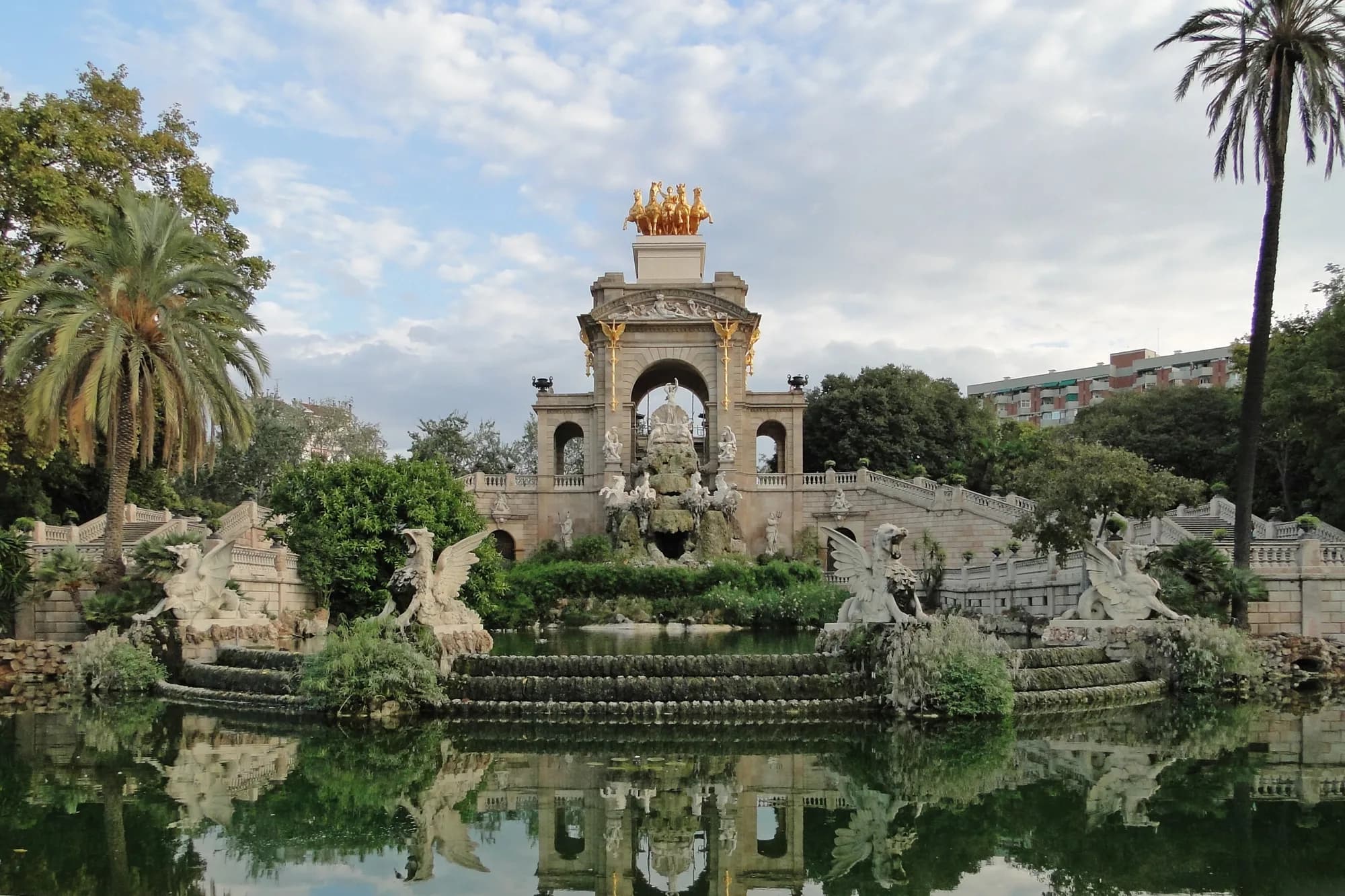
Parc de la Ciutadella
Imagine stepping into a lush, green oasis in the heart of Barcelona, where history and nature intertwine in perfect harmony. Parc de la Ciutadella, Barcelona's premier historic central park, offers a serene escape with its sprawling Mediterranean gardens, winding palm-lined avenues, and tranquil boating lake. This idyllic green space, established in the late 19th century on the grounds of a former military citadel, is a vibrant hub for locals and visitors alike, hosting everything from open-air yoga and leisurely picnics to live acoustic music and leisurely rowboat rides. As you wander through this enchanting park, you'll discover its architectural gems, including the iconic Cascada Monumental fountain, the Parliament of Catalonia housed in the former royal arsenal, and the Castle of the Three Dragons, a pioneering landmark of Catalan Modernisme.
Parc de la Ciutadella (Ciutadella Park) is Barcelona's premier historic central park and idyllic green oasis, covering over 17 hectares (42 acres) on the northeastern edge of Ciutat Vella. Established in the late 19th century on the grounds of a demolished 18th-century military citadel fortress, the park is celebrated for its lush Mediterranean gardens, winding palm-lined avenues, tranquil boating lake, and magnificent architectural monuments. The park's undisputed centerpiece is the Cascada Monumental (Monumental Waterfall), an opulent neoclassical and Baroque fountain designed by Josep Fontserè with contributions from a young architecture student named Antoni Gaudí. The park also hosts the Parliament of Catalonia (housed in the former 18th-century royal arsenal), the Castle of the Three Dragons (Castell dels Tres Dragons) designed by Lluís Domènech i Montaner for the 1888 Universal Exposition, a famous life-size stone mammoth sculpture, and the Barcelona Zoo. Today, Parc de la Ciutadella is the vibrant heart of local recreation, where Barcelonians and travelers alike gather for picnics, open-air yoga, rowboating, live acoustic music, and relaxed strolls under the shade of century-old trees.
History
Parc de la Ciutadella occupies what was once the most dreaded symbol of repression in Barcelona. Following the 1714 Siege of Barcelona in the War of the Spanish Succession, King Philip V ordered the construction of a massive star-shaped military citadel fortress to keep the rebellious Catalan populace under strict surveillance and control, demolishing over a thousand homes in the La Ribera district to clear the firing lines. For over a century, the fortress stood as a hated reminder of defeat. In 1869, following the Glorious Revolution, General Joan Prim successfully transferred the citadel grounds to the city to be demolished. Architect Josep Fontserè won the 1872 urban design competition under the motto 'The gardens are to the city what the lungs are to the human body.' The park was transformed into a grand public space and hosted the landmark 1888 Barcelona Universal Exposition, leaving a legacy of historic pavilions, sculptures, and landscape architecture that remains the city's green heart.
Fun Facts
- The Life-Size Stone Mammoth: Near the waterfall stands a life-size stone sculpture of a Woolly Mammoth, sculpted in 1907 by Miquel Dalmau as part of an ambitious planned series of prehistoric animals for the Natural History Museum.
- Young Antoni Gaudí's Early Work: Before achieving international fame with the Sagrada Família, a young architecture student named Antoni Gaudí worked as an assistant draughtsman on the Cascada Monumental, helping design the hydraulics, water tank, and decorative elements.
- Fortress to Democracy: The building that houses the Parliament of Catalonia was originally built in 1727 as the Citadel's military arsenal (Arsenal de la Ciutadella) by Flemish military engineer Joris Prosper van Verboom.
- The Boating Lake: Visitors can rent rowboats on the tranquil central lake, shaded by bald cypresses (Taxodium distichum) growing directly out of the water.
- Castle of the Three Dragons: Built as the café-restaurant for the 1888 Universal Exposition by renowned modernist architect Lluís Domènech i Montaner, this pioneering brick building is considered an early landmark of Catalan Modernisme.
Guide Tips
- Climb the stone staircases on either side of the Cascada Monumental to reach the upper balustrade and the golden quadriga statue of Aurora.
- Rent a small wooden rowboat on the lake for 30 minutes to admire the weeping willows and water lilies from the water.
- Bring a picnic and enjoy the expansive shaded lawns under palm trees near the bandstand or the mammoth sculpture.
- Enter the park via Passeig de Lluís Companys starting from the Arc de Triomf for the grandest visual approach.
Opening Hours
Mon-Sun: 10:00 - 22:30