
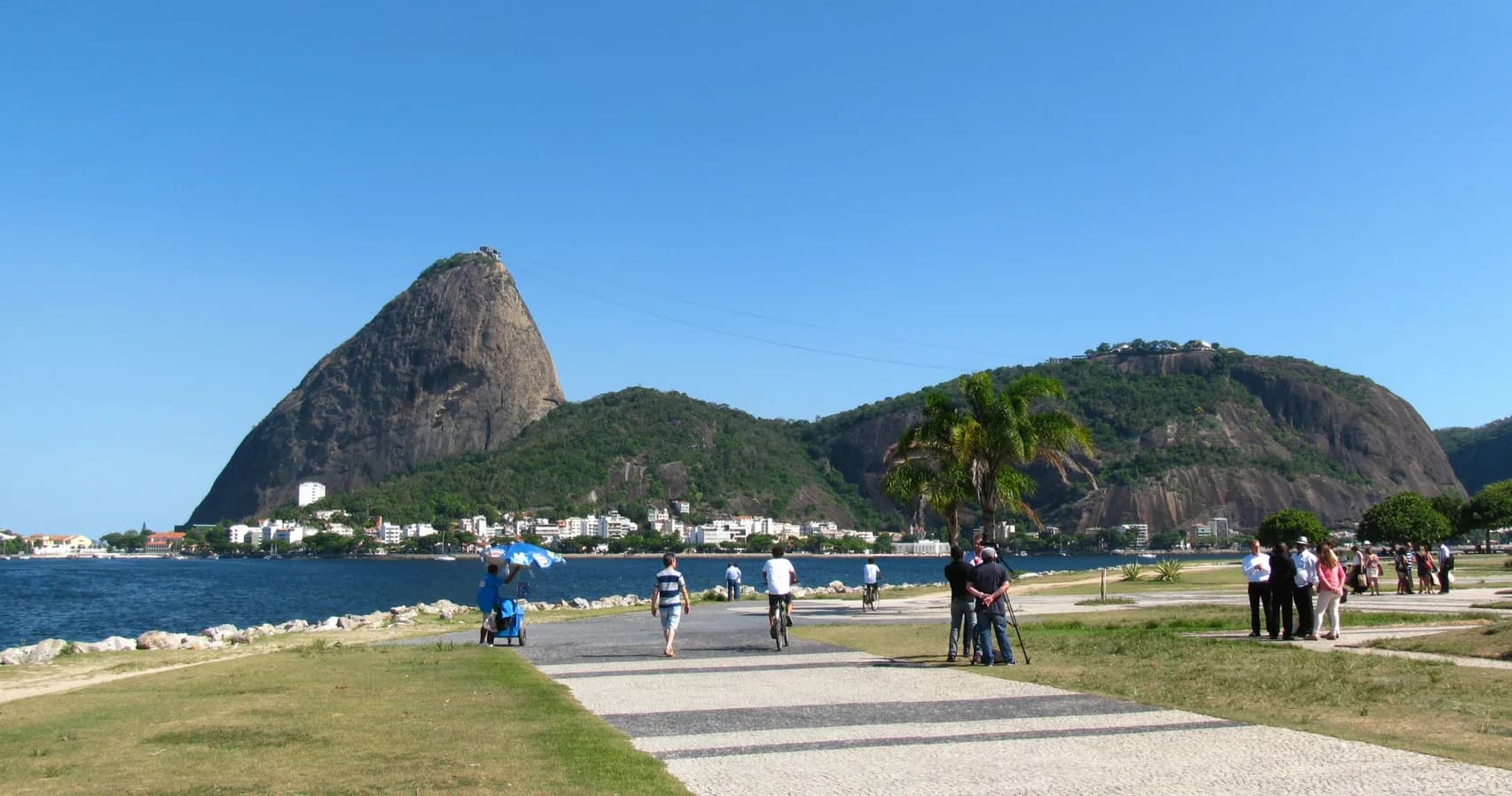
Flamengo Park (Aterro do Flamengo)
Imagine a sprawling oasis right by the sea, where the skyline of Rio de Janeiro meets the serene expanse of Guanabara Bay. Welcome to Flamengo Park, affectionately known as the Aterro, a sprawling urban retreat that stretches over 7 km along the waterfront. Whether you're chasing the sunset, seeking a spot for a leisurely picnic, or craving a game of football, this park offers a slice of paradise. On weekends, Flamengo Park transforms into a bustling hub of activity, with cyclists, skaters, and families taking over the car-free lanes. It's a place where the city's rich history and vibrant culture come alive, offering a unique blend of modern architecture, lush gardens, and the natural beauty of the bay. Join us as we uncover the secrets of this beloved Rio landmark.
Flamengo Park, known to everyone in Rio as the Aterro, is a vast waterfront park stretching about 7 km along Guanabara Bay, from Santos Dumont Airport to Botafogo Cove. Built on land reclaimed from the sea, it is one of the largest urban seaside parks in the world and one of the city's favourite places for sport, picnics and sunsets. The park combines modernist architecture by Affonso Eduardo Reidy with gardens by Roberto Burle Marx, planted with thousands of trees and palms. Inside you will find the Museum of Modern Art (MAM Rio), the Carmen Miranda Museum, the Monument to Brazil's World War II dead (Monumento aos Pracinhas), the Estácio de Sá monument, the Marina da Glória, playgrounds, football pitches, skate areas, a beach and long cycling and running paths. The views are a big part of the appeal: Sugarloaf Mountain sits across the bay and the light at sunset is superb. On Sundays and holidays the roads are closed to cars and the whole park becomes a giant open-air leisure area for walkers, cyclists, skaters and families.
History
The Aterro was the idea of Lota de Macedo Soares, who persuaded Governor Carlos Lacerda to turn land reclaimed from the bay into a public park instead of more fast roads. Reidy led the architecture and urban design, Burle Marx created the landscaping, and a large team of architects and specialists worked under Lota's direction. Much of the landfill came from the demolition of Morro de Santo Antônio, and works began around 1960.
The park was listed as heritage by the national heritage agency (IPHAN) on 28 July 1965, even before it opened, and was inaugurated in October 1965 as Parque IV Centenário to mark the city's 400th anniversary. It is officially Parque Brigadeiro Eduardo Gomes, but everyone still calls it the Aterro. It is part of the Rio de Janeiro cultural landscape listed by UNESCO as a World Heritage Site in 2012.
Fun Facts
- It is considered one of the largest urban seaside parks in the world, with more than 1.2 million square metres.
- Part of the landfill came from the demolition of Morro de Santo Antônio in downtown Rio.
- It was listed as heritage in July 1965, before it was even inaugurated.
- The Monument to World War II dead holds a changing-of-the-guard ceremony on the first Sunday of each month.
- Its football pitches are famous among Cariocas as the 'Maracanã of the pick-up game' (peladas).
- The park was planned so people could walk and play by the sea instead of driving past it.
Guide Tips
- Come on a Sunday or public holiday, when the roads are closed to cars and the park fills with cyclists, skaters and families.
- Rent a bike and ride the waterfront, then stop at MAM Rio and its Burle Marx gardens.
- Stay for sunset with Sugarloaf as the backdrop; the stretch near the Marina da Glória and the beach is a good spot.
Opening Hours
Open-air, accessible daily. Leisure area with roads closed to cars on Sundays and holidays.