
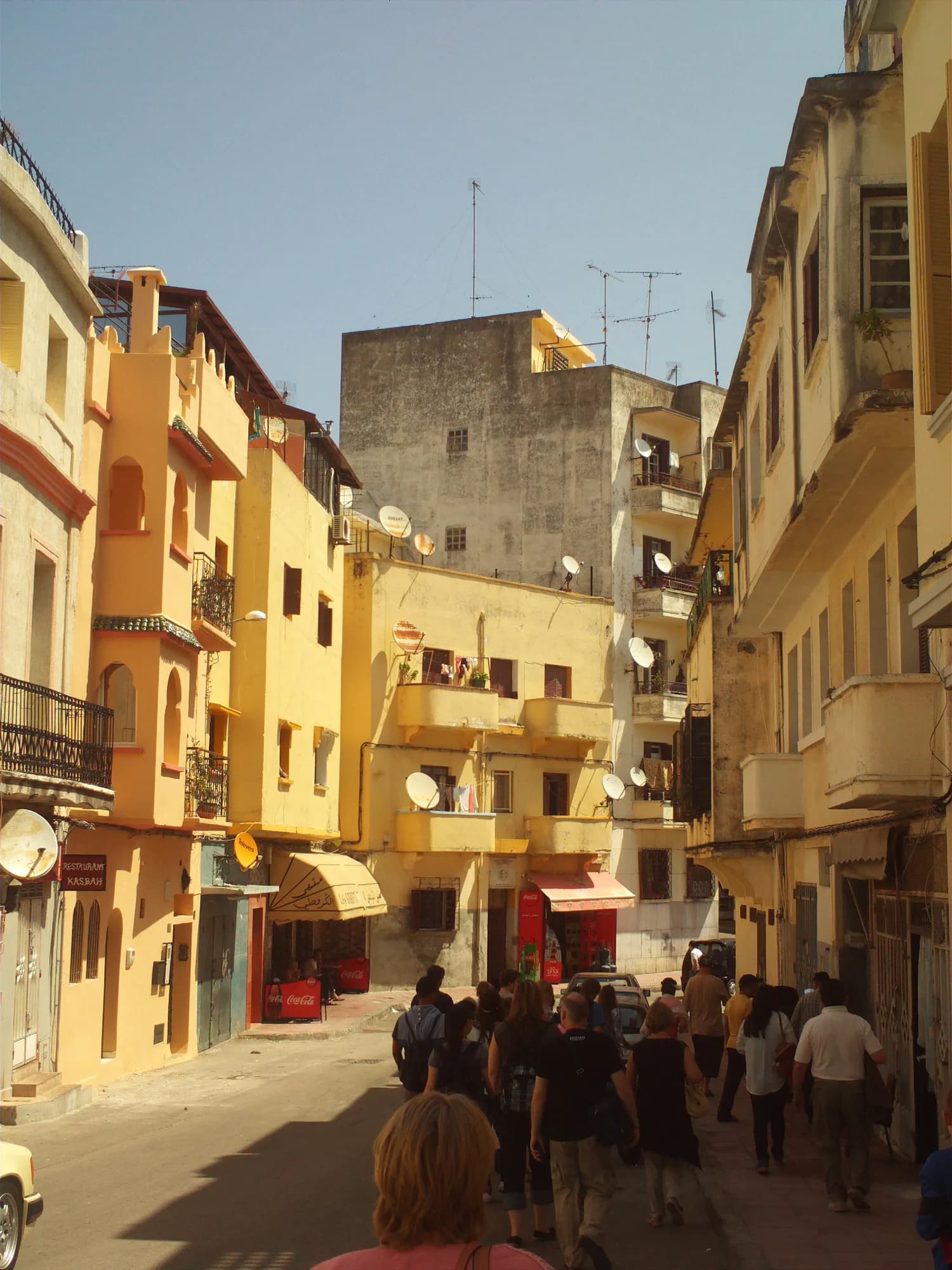
Tangier Medina
Imagine wandering through a living museum where every corner tells a story. Tangier Medina, the dense historic heart of Tangier, is not just a destination but a journey through time. As you navigate its narrow lanes, you'll find yourself immersed in a rich tapestry of Moroccan, Portuguese, English, and international influences. Each step reveals a new facet of this city that has long been a bridge between continents. Whether it's the bustling souks, the serene religious buildings, or the remnants of former diplomatic sites, the Medina offers an experience that's as educational as it is enchanting. Prepare to be captivated by the intricate details and the vibrant life that pulses through its ancient streets.
The dense historic heart of Tangier and the city’s most important walking experience. Narrow lanes, souks, homes, workshops, religious buildings and former diplomatic sites make the Medina the connective tissue between Grand Socco, Petit Socco and the Kasbah. It should be treated as a route zone rather than a single photo stop.
History
Tangier's Medina is the historic walled core of a city that has linked North Africa, the Atlantic and the Mediterranean for centuries. Its present street pattern preserves layers of Moroccan, Portuguese, English and international-era history, with markets, religious buildings, diplomatic sites and residential lanes interwoven rather than separated into a single monument district.
Fun Facts
- The Medina contains traces of several periods of foreign rule alongside a continuously Moroccan urban fabric.
- Many of Tangier's major historic stops are only a few minutes apart on foot but connected by steep, irregular lanes.
Guide Tips
- Treat this record as a route zone, not as a standalone point attraction.
- Use a local guide or carefully planned walking sequence because the dense lane network makes direct point-to-point navigation misleading.
Opening Hours
Public historic district; streets are generally accessible at all hours, while individual sites and businesses keep their own schedules.