
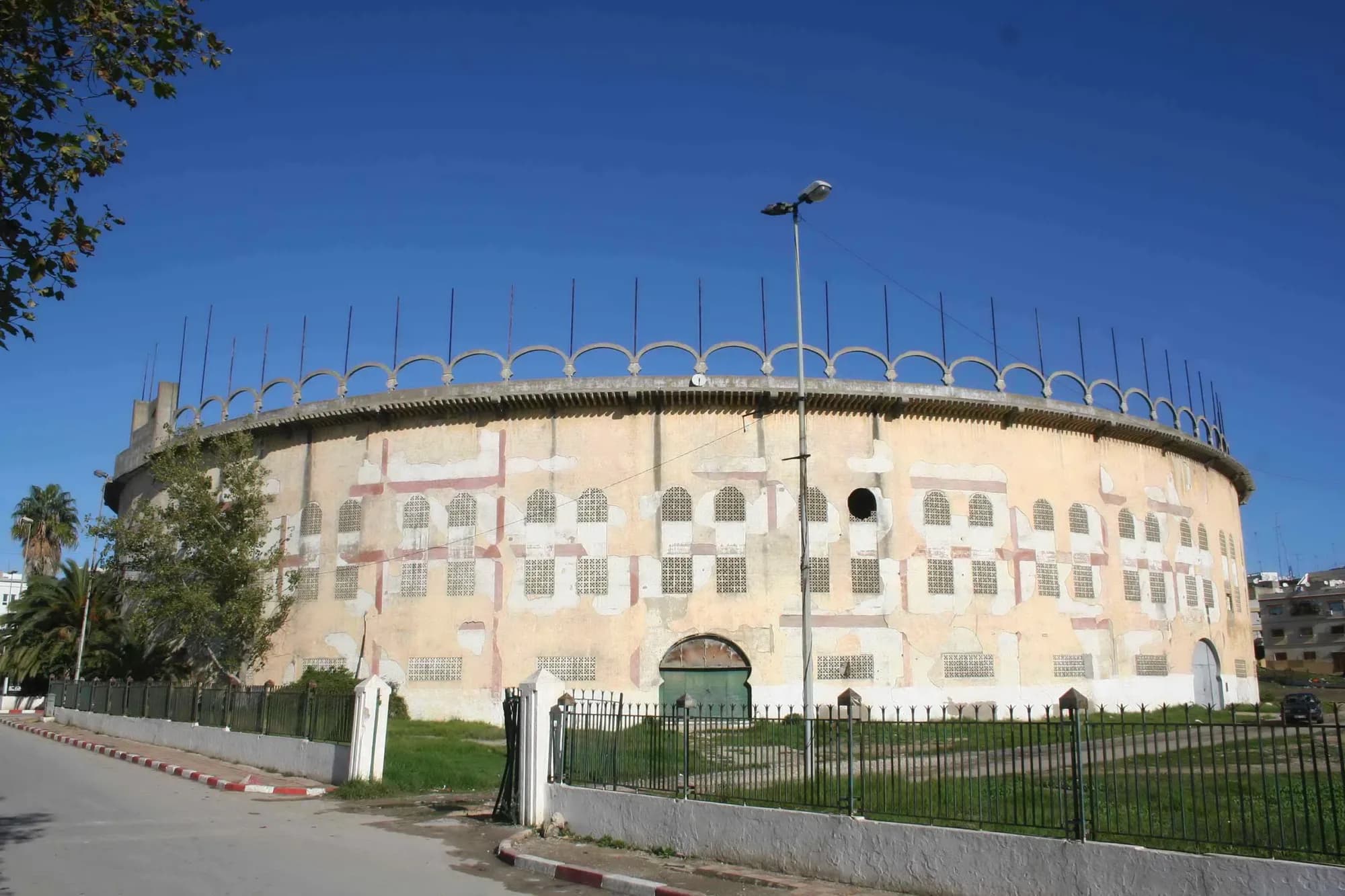
Plaza de Toros
Imagine stepping back in time to Tangier's Spanish era, where the Plaza de Toros stands as a testament to the city's rich Iberian heritage. This striking bullring, built between 1949 and 1950, offers a unique glimpse into the architectural marvels and historical narratives of 20th-century Tangier. As you explore its reinforced-concrete structure, you'll be captivated by the arena's original capacity of over 13,000 spectators, a feat accomplished in just fourteen months. Perfect for those intrigued by Tangier's international period, this landmark is a must-see for architecture and history enthusiasts, especially when paired with the nearby Gran Teatro Cervantes for a deeper dive into Spanish cultural influences in the city.
Tangier's Spanish era bullring, a striking reminder of the city's Iberian cultural connections and 20th century urban history. It is most useful as an architecture and history stop on a vehicle route outside the Medina, especially for visitors interested in Tangier's international period.
History
Tangier's Plaza de Toros was built between 1949 and 1950 and inaugurated on 27 August 1950, when the city still had a large Spanish community. The reinforced-concrete arena had more than 13,000 seats and reflects the Iberian cultural layer of twentieth-century Tangier. Bullfighting ceased after independence apart from a brief revival in 1970.
Fun Facts
- The arena was constructed in only fourteen months.
- Its original capacity was over 13,000 spectators.
Guide Tips
- Use the stop for architecture and twentieth-century urban history rather than assuming interior access.
- Combine it with Gran Teatro Cervantes for a Spanish-heritage theme, but note that the two sites are not adjacent.