
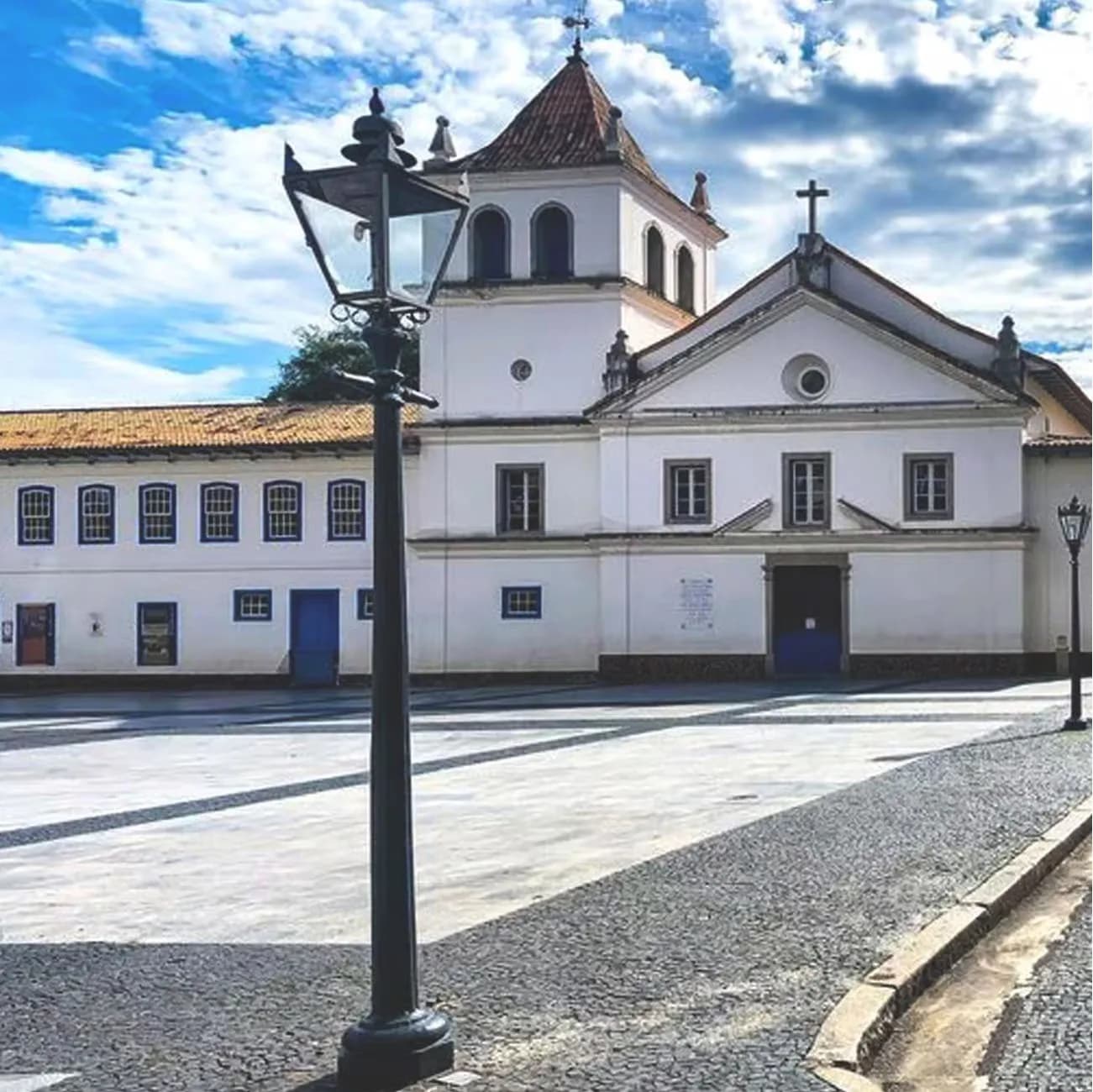
Patio do Colégio
¿Listo para un viaje al pasado? Pátio do Colégio te espera en el corazón de São Paulo. Este lugar no solo es el cuna de la ciudad, sino también un tesoro histórico y arquitectónico. Aquí, en 1554, un grupo de sacerdotes jesuitas fundó lo que sería la ciudad más grande de Brasil. ¿Qué mejor manera de entender la historia de São Paulo que visitando su lugar de nacimiento? Además, el monumento Glória Imortal te hará sentir la importancia de este sitio. ¡Prepárate para una experiencia única e inolvidable!
El Pátio do Colégio (o Pateo do Collegio) es ampliamente considerado el lugar de nacimiento de São Paulo. Marca el punto exacto donde la ciudad fue fundada el 25 de enero de 1554.
Historia
The Pátio do Colégio (or Pateo do Collegio) is widely considered the birthplace of São Paulo. It marks the exact spot where the city was founded on January 25, 1554.
Historical Significance
Foundation: A group of Jesuit priests, including Manuel da Nóbrega and José de Anchieta, established a small mission on a hill between the Tamanduateí and Anhangabaú rivers to evangelize the indigenous population.
The First Mass: The city’s official start dates back to the inaugural mass celebrated at the site's Jesuit school.
Government Seat: For over a century (1765–1912), the building served as the Palace of the Governors, the official residence and seat of the São Paulo government.
The monument in front of the Pátio do Colégio is the Glória Imortal aos Fundadores de São Paulo (Immortal Glory to the Founders of São Paulo).
The Monument: Glória Imortal
Inaugurated in 1925 to celebrate the city's 4th centenary, this 25.75-meter granite and bronze column was created by Italian sculptor Amadeo Zani.
The Figure at the Top: A bronze female figure representing the City of São Paulo crowns the city's founders. She holds a torch (symbolizing eternal love) in her right hand and laurel branches and a sickle (glory and labor) in her left.
The Base: Four bronze reliefs depict key historical moments:
The first mass celebrated in 1554.
The catechism of indigenous people.
The defense of the village by Chief Tibiriçá.
The peace mission of Anchieta and Nóbrega to the Tamoio people.
Datos curiosos
- El edificio blanco que ves hoy es en realidad una réplica terminada en 1979.
- El jardín contiene un segmento preservado de una pared de tierra apisonada (taipa de pilão) de 1585, considerado el elemento arquitectónico más antiguo de São Paulo.
Consejos del guía
- Hoy, el complejo es un centro cultural y religioso ubicado en el área del centro histórico.
- El Museo Anchieta alberga una colección de arte sacro colonial, documentos y un modelo de São Paulo del siglo XVI.
- La Iglesia contiene reliquias del santo, incluyendo un trozo de su fémur.
- Todavía puedes ver un segmento de la pared original del siglo XVI hecha de taipa de pilão (tierra apisonada).
Horario de apertura
Mon: Closed, Tue-Sat: 9:00 AM - 4:00 PM, Sun: Closed