
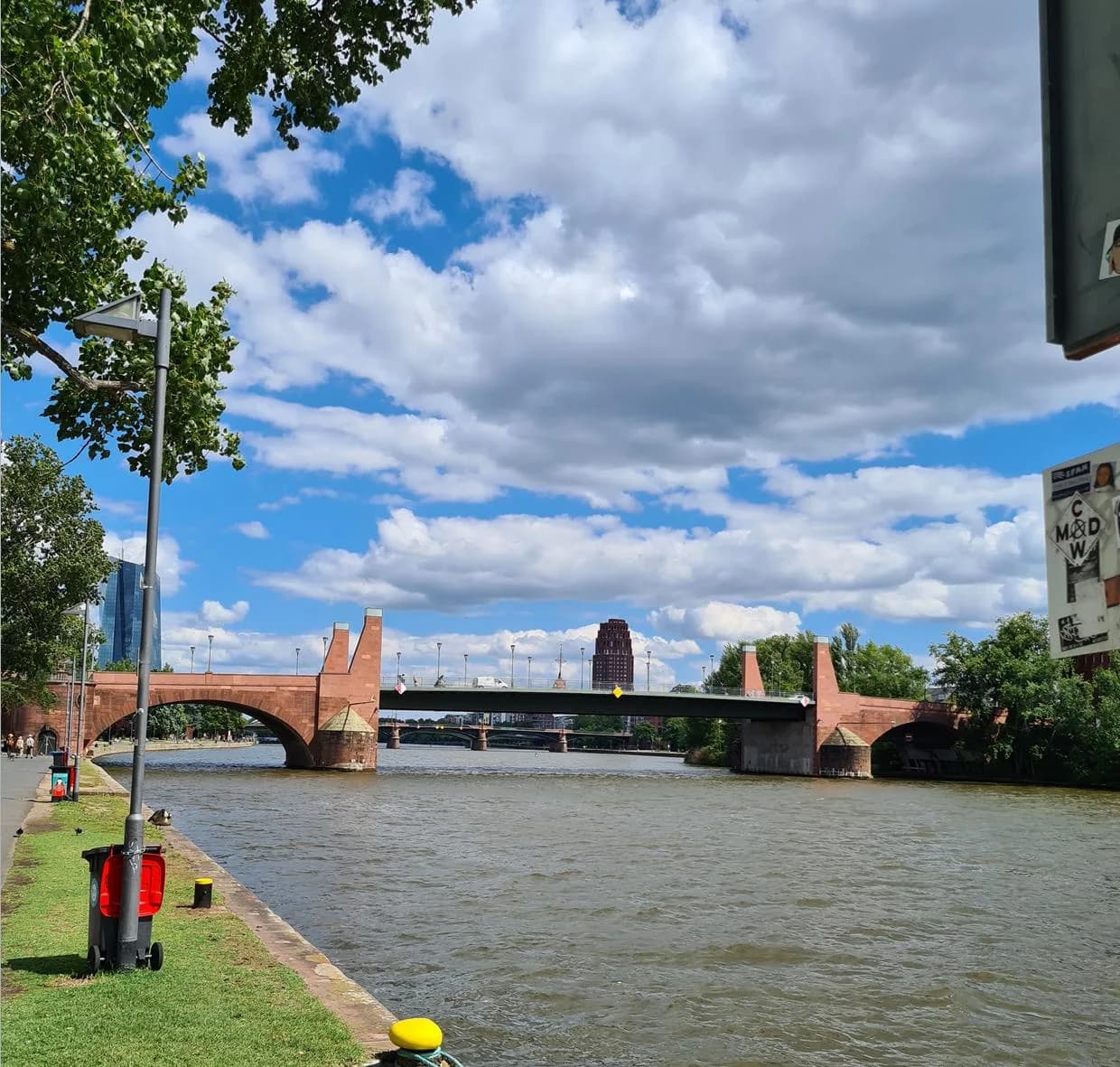
Alte Brücke (The Oldest Bridge)
Imagine stepping back in time to when Frankfurt was a bustling medieval city, its lifeblood flowing through the Main River. The Alte Brücke, Frankfurt's oldest bridge, stands as a testament to the city's rich history and strategic importance. This iconic structure, first documented in 1222, has witnessed centuries of transformation, from a natural ford to a vital connection between the northern and southern banks of the river. As you walk across the Alte Brücke, you'll not only be crossing a river but also journeying through the very heart of Frankfurt's past. Whether you're a history buff or simply a traveler with a curious spirit, the Alte Brücke offers a unique glimpse into the city's evolution, from a Frankish ford to a thriving financial center. Prepare to be captivated by the stories and secrets that this historic landmark holds.
The Alte Brücke, Frankfurt's oldest bridge and the oldest documented bridge across the Main River in the city, was first mentioned in a document from 1222. The earliest bridge was likely wooden, while the stone bridge we know today developed through later rebuilding and expansion. It connected the historic center on the northern bank with Sachsenhausen on the southern bank. For centuries, it was the city's most important connection across the Main and one of the major routes through Frankfurt. Before the bridge, people had to find and use the natural ford. After the bridge, people could cross at a fixed, controlled point. This made movement more predictable and helped Frankfurt strengthen its position as a commercial and strategic center. The bridge also became important for controlling traffic into the city and collecting tolls from people and goods crossing it. The name Frankfurt itself preserves the memory of the original crossing. The earliest recorded form of the name, Franconofurd, appears in 794 AD. It is generally understood as 'the ford of the Franks.' Franco refers to the Franks, the Germanic people who controlled the region, and furd is an old Germanic word meaning ford, a place where a river could be crossed. So: Franconofurd → Frankfurt 'The Franks' ford.' The name therefore describes the geographical feature that helped make the settlement important in the first place. And the bridge came much later. When the Alte Brücke was first documented in 1222, Frankfurt had already existed for centuries. The bridge did not create Frankfurt — it replaced the natural crossing that had helped create the city. So Frankfurt's story can be understood as a simple evolution: natural ford → settlement → Frankish royal center → medieval bridge → trading city → financial center. Frankfurt was, quite literally, a city born from a river crossing.
History
**Frankfurt:** Born at the Ford.
**Ford**= Shallow part of a river where people could cross on foot or on horseback.)
Frankfurt grew around a natural ford in the Main River, somewhere in the area of today's Alte Brücke (Old Bridge). We don't know the exact position of the original ford, but historians generally place the historic crossing somewhere in this part of the river.
Before there was a bridge, this shallow section of the Main allowed people, horses, and carts to cross the river. The crossing was important because Frankfurt stood at the intersection of long-distance routes connecting different parts of Central Europe. Travelers and merchants could cross the Main here and continue their journeys in different directions.
The location also had another major advantage: the Domhügel (Cathedral Hill), just north of the river, provided higher and safer ground for settlement. Over time, the combination of a useful river crossing, important routes, and protected high ground attracted people, trade, and eventually political power.
From Ford to Bridge
For centuries, the river was crossed using the natural ford. But as Frankfurt grew, relying on a shallow crossing was no longer enough. A permanent bridge made it possible to cross the Main more reliably, especially for the growing movement of merchants, goods, and people.
The Alte Brücke is Frankfurt's oldest bridge and the oldest documented bridge across the Main in the city. It is first mentioned in a document from 1222. The earliest bridge was probably wooden, while the stone bridge that we associate with the Alte Brücke today developed through later rebuilding and expansion.
The bridge connected the historic center on the northern bank with Sachsenhausen on the southern bank. For centuries, it was the city's most important connection across the Main and one of the major routes through Frankfurt.
**This was a major transformation:**
**Before the bridge:**
People had to find and use the natural ford.
**After the bridge:**
People could cross at a fixed, controlled point.
That made movement more predictable and helped Frankfurt strengthen its position as a commercial and strategic center. The bridge also became important for controlling traffic into the city and collecting tolls from people and goods crossing it.
**Why “Frankfurt”?**
The name Frankfurt itself preserves the memory of the original crossing.
The earliest recorded form of the name, Franconofurd, appears in 794 AD. It is generally understood as “the ford of the Franks.”
Franco → the Franks, the Germanic people who controlled the region
furd → an old Germanic word meaning ford, a place where a river could be crossed
So:
Franconofurd → Frankfurt
“The Franks' ford.”
The name therefore describes the geographical feature that helped make the settlement important in the first place.
And the bridge came much later. When the Alte Brücke was first documented in 1222, Frankfurt had already existed for centuries. The bridge did not create Frankfurt — it replaced the natural crossing that had helped create the city.
So Frankfurt's story can be understood as a simple evolution:
natural ford → settlement → Frankish royal center → medieval bridge → trading city → financial center
Frankfurt was, quite literally, a city born from a river crossing.
Fun Facts
- Historically, a bridge tower stood on the Frankfurt side.
- The bridge was once lined with defensive structures and gates.
- Frankfurt's famous Brickegickel (bridge rooster) has been associated with the bridge for centuries.
- The Main River crossing was one of the reasons Frankfurt became strategically important.
Guide Tips
- Visit the bridge during the evening for a stunning view of the city.
- Take a guided tour to learn more about the bridge's history and significance.
- Don't miss the chance to see the Brickegickel, a symbol of Frankfurt's heritage.
- Explore the surrounding area to see how the bridge has shaped the city's development.
Opening Hours
24/7 - External Visit