
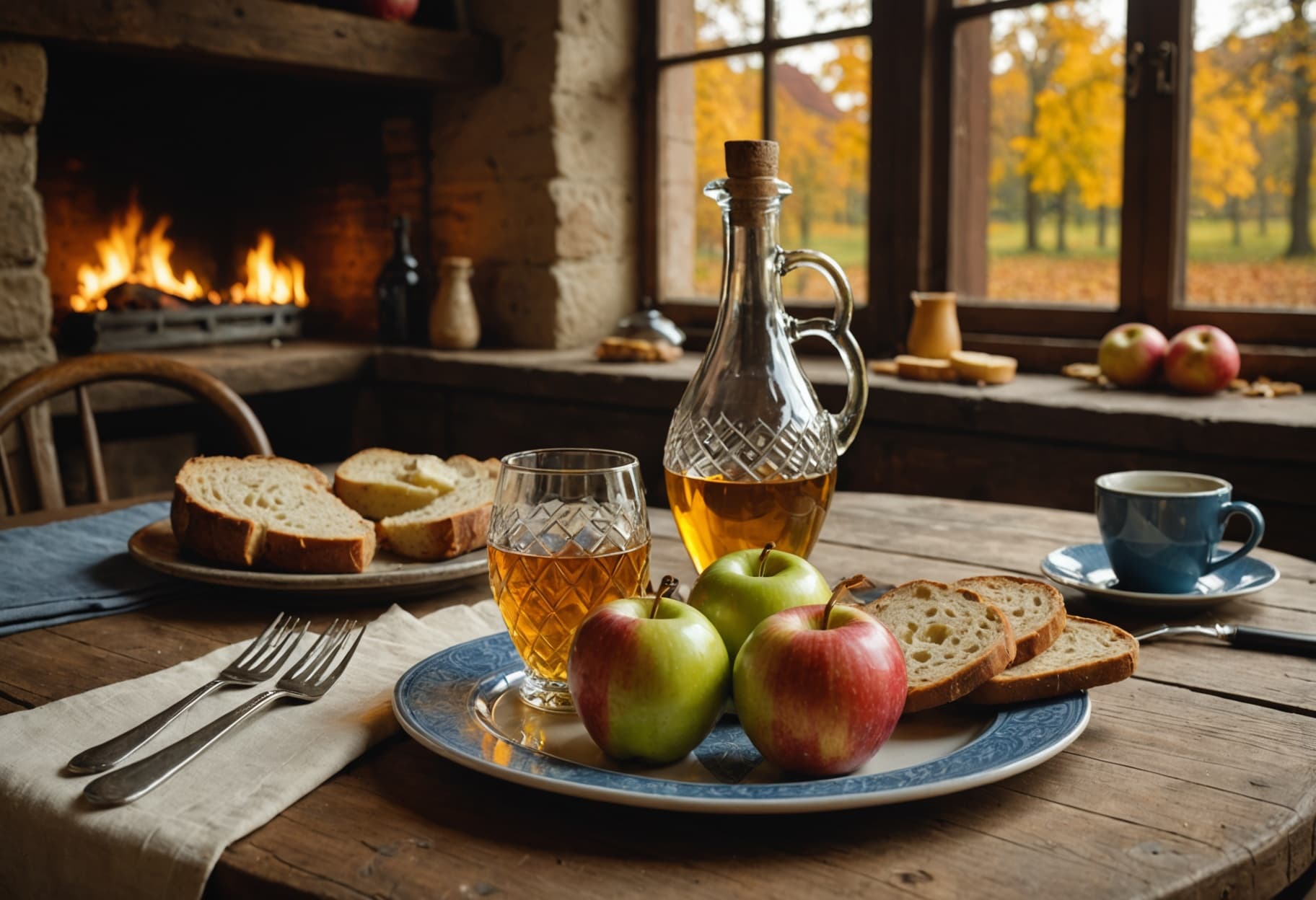
Ebbelwoi: Frankfurt's Beloved Apple Wine
Tart, dry and served in a diamond-cut glass: how Frankfurt turned humble apple wine into a way of life, and how to drink it like a local.
- frankfurt
- apfelwein
- ebbelwoi
- sachsenhausen
- bornheim
- food-and-drink
- local-culture
- hessian-cuisine
- taverns
Ask a Frankfurter what the city tastes like and you will not hear "sausage" for long. Sooner or later the answer arrives in a ribbed glass: Ebbelwoi, the tart, dry apple wine that has been poured in the city's taverns for centuries. Beer is a guest here. Apple wine is family.
It is not a drink that wins hearts on the first sip. It is sour, cloudy, a little rustic, and entirely unlike the sweet, fizzy ciders of France or England. But spend one evening on a shared bench with a jug on the table and a plate of something salty in front of you, and you begin to understand why people in this city defend it so fiercely.
What it is, exactly
Apfelwein (literally "apple wine") is pressed apple juice that has been left to ferment. It is still rather than sparkling, usually golden and a little hazy, and typically sits at around five to six and a half percent alcohol. That is stronger than many visitors expect, and lighter than most wines.
The taste is the point. Traditional Frankfurt apple wine is made from sharp, acidic apples, not dessert fruit, and it finishes dry. Think crisp, tangy, slightly tannic. Some people compare the first sip to biting into a very tart apple; others say it tastes like a cold glass of something that has been waiting for a plate of fatty food.
Frankfurt gives the drink a whole vocabulary of names. You will hear Ebbelwoi, Ebbelwei, Äppelwoi, Äppler and Stöffche, and a glass of it is called a Schoppen. All mean the same thing: this is the local drink, and you are expected to treat it with respect.
From orchard to glass
Behind every Schoppen is an orchard. Hesse is dotted with Streuobstwiesen, traditional meadows where old apple trees of many varieties grow scattered across the grass rather than in tidy rows. These orchards, in the Taunus, the Wetterau, the Odenwald and around the edge of Frankfurt itself, supply much of the fruit for local apple wine. Producers speak of dozens of different varieties arriving at the presses each autumn, and the blend of acid, sugar and tannin they bring is what gives each house its character.
Harvest and pressing happen in early autumn. The fresh juice runs off, yeast does its work, and over the following weeks and months the juice becomes wine. Unlike grape wine, apple wine pays little attention to vintage; the skill lies in the apples you choose and how you handle the cellar. Some taverns still press their own fruit. Many others buy or blend and then age the wine in their own cellars. A handful of family presses, such as the large Possmann press in the Rödelheim district, which has been making apple wine in Frankfurt since 1881, supply bottles to shops and restaurants across the region.
The drink is serious enough that the name "Hessischer Apfelwein" is protected under European rules as a geographical indication. That means the real thing comes from Hesse, not from a factory somewhere else using the same words.
A short history
The most commonly told story goes like this: when vineyards around Frankfurt struggled, apples took over, and farmers began pressing fruit for their own tables. Cultivated orchards grew, taverns with their own presses followed, and by the 18th century apple wine was the city's everyday drink. Local tradition dates the first licensed tavern pouring to 1754, in Sachsenhausen, on the south bank of the Main.
For a long time this was a working person's drink, cheap, filling and made close to home. That is why so many of the best taverns still sit in modest, low-built districts like Sachsenhausen, Bornheim and Seckbach, where craftsmen and small tradespeople once lived. A traditional sign marks a tavern: a small wreath hung outside the door. Where the wreath hangs, they pour.
The twentieth century was hard on apple wine. Wars, changing tastes and the arrival of global drinks pulled customers away, and at various points the culture looked like it might fade. In the later decades, though, a new wave of pride arrived. Younger drinkers and tavern owners rediscovered single-variety wines, sparkling versions and carefully aged bottles, and the city began to talk about its apple wine as heritage rather than habit. Today Frankfurt celebrates it with its own festival, a museum-like sense of tradition, and a loyal crowd that treats the first sour sip as a rite of passage.
The ritual: Bembel and Gerippte
Half of the pleasure is the way it arrives.
- The Bembel is a round, pot-bellied stoneware jug, grey with blue painted decoration. It is the table jug, and you order it by how many glasses it holds. A Vierer holds four glasses, an Achter eight, and a Zwölfer twelve, so the whole table can agree on how thirsty it is.
- The Gerippte (or Geripptes) is the glass. Its surface is cut with a diamond or lozenge pattern that catches the light and gives your fingers something to hold, which was useful in days when meals were eaten with greasy hands. A normal serving is a quarter to a third of a litre.
Pour from the Bembel into your glass. Drinking straight from the jug is considered rude. In some taverns, a small lid sits on the glass to keep your place when you step away.
How to order
You can drink it three main ways:
- Pur: straight, undiluted, the way purists like it.
- Sauer gespritzt: mixed with sparkling mineral water. This softens the acidity and makes it easier to drink on a warm evening or at lunch.
- Süß gespritzt: mixed with lemonade. It is popular, especially with newcomers, though some strict taverns frown on it and may not serve it at all. Ask politely and be prepared for a look.
Mixing apple wine with cola or beer exists, but Frankfurt purists consider it a faux pas.
If you do not drink alcohol, nearly every tavern and every major press now makes alcohol-free apple wine, and there are also fruit-blended and sparkling versions.
The seasons of apple wine
The calendar shapes what you will find in the glass.
- Süßer appears first each autumn. It is fresh, cloudy, unpasteurised apple juice, sweet and alcohol-free, and available only briefly because it begins to ferment on its own.
- Rauscher comes next: juice that has started to ferment. It is sweet, sour, bubbly and brownish, and it creeps up on you. Its other reputation is a digestive one. Locals warn newcomers about it with a grin, and fewer taverns serve it than used to.
- Apfelwein proper arrives after a further few weeks of fermentation and ageing, and is the clear-ish, dry wine you drink the rest of the year.
- Hot apple wine shows up in winter, often spiced with cloves, and it is served at Christmas markets in the city centre.
- Summer is garden season. From late spring, tavern gardens in Sachsenhausen, Bornheim and elsewhere open their tables beneath the trees.
Some producers also make Speierling, a version in which a small amount of service tree berries is added to bring extra astringency and a distinctive, grippy finish.
What to eat with it
Frankfurt's tavern menu is built to meet the sour, dry apple wine halfway. The classics are hearty, salty and fat-friendly.
- Handkäs mit Musik: a pungent, low-fat sour-milk cheese, marinated in vinegar, oil and raw onions. The "music" is the onions, and what they do to you later. Order it with dark bread and caraway.
- Frankfurter Schnitzel mit Grüne Soße: pork schnitzel with the city's cold green sauce, usually served with boiled potatoes and halved boiled eggs. The sauce is made from seven fresh herbs, among them borage, sorrel, chervil, chives, cress, parsley and salad burnet, folded into sour cream or yoghurt and quark.
- Rippchen mit Kraut: a cured, cooked pork rib or chop with sauerkraut and mashed potatoes. This is the classic tavern plate, especially in cooler months.
- Frankfurter Würstchen: the thin, lightly smoked sausages that carry a protected name, served warm with mustard and bread, often with sauerkraut.
- Sweet endings: Frankfurter Kranz, a ring-shaped buttercream cake with jam and crunchy praline, and Bethmännchen, marzipan cookies decorated with almond halves, especially at Christmas.
Vegetarians are better served than they used to be. Many taverns now offer meat-free schnitzel, and some do vegan green sauce.
Where to drink it
Sachsenhausen is the classic address, but the best evenings are often a little outside the tourist lanes.
- Apfelwein Wagner (Schweizer Straße, Sachsenhausen): a family-run institution since 1931, long shared tables, a reputation for gruff, quick service that is part of the show. A reliable first stop.
- Zum Gemalten Haus (Schweizer Straße, Sachsenhausen): a painted-parlour tavern next door in spirit and in street, much loved for its old-Sachsenhausen atmosphere.
- Fichtekränzi (Wallstraße, Sachsenhausen): one of the district's oldest tavern rooms, with the traditional wreath over the door.
- Frau Rauscher (Sachsenhausen): a lively tavern with a wide list of single-variety apple wines, plus Speierling and sparkling options.
- Lorsbacher Thal (Große Rittergasse, Sachsenhausen): treats apple wine almost like a cellar wine, with a very long list to match.
- Zur Buchscheer (Sachsenhausen-Süd): a quieter garden tavern that has pressed its own wine for generations, away from the crawl route.
- Apfelwein Solzer (Bornheim): a family press with a big garden off Berger Straße.
- Zum Rad (Seckbach): a village-lane tavern with a courtyard that rewards the longer trip.
- Frankfurter Äpfelwein Botschaft (Rödelheim): the tavern beside the Possmann press, with an orchard meadow out front.
- Zum Taunus (Sossenheim): a family-run neighbourhood pub that serves only its own pressed wine, with Süßer and Rauscher in season.
Opening hours and menus change, and busy weekends fill quickly, so check ahead and book if you are a group.
Frankfurt's apple wine events
- The Apfelweinfestival: for ten days each August, the Roßmarkt in the city centre fills with Bembel stands, stage acts and tastings. A prize called the Golden Apple, awarded since 2007, honours people who protect the traditional orchard meadows.
- The Ebbelwei-Express: a historic tram painted in bright colours that trundles around the city on weekends and public holidays. A ticket covers a one-hour-plus loop with an apple wine (or apple juice or mineral water) and pretzels. It passes Sachsenhausen along the way. Check the current timetable before you go.
- Press visits: some of the larger presses, including Possmann in Rödelheim, offer guided tours at certain times of year.
Tips for your first visit
- Go with company. Bembel and shared benches work best with a table of people.
- Start with a Schoppen, not a Bembel. Find out if you like it before committing to eight glasses.
- Order food. Handkäs and bread is the cheapest authentic dinner in town, and the food softens the acidity.
- Be ready to share a table. In busy taverns, strangers end up on the same bench. It is part of the point.
- Do not take the gruff waiter personally. Rudeness in some taverns is a tradition, and a little banter back is welcome.
- Try the autumn pours. If you are visiting in autumn, ask whether Süßer or Rauscher are on.
- Pace yourself. Apple wine goes down easily, and the alcohol arrives quietly.
A last word
Frankfurt jokes that Ebbelwoi only tastes right after the third glass. Do not judge it on the first sip. Order a Schoppen, add a plate of Handkäs, find a seat on a shared bench, and let the evening do the work. Prost, or as they say here, Gude!
Comments
Loading comments...
Related Stories
Why Visit Belém? The Amazon's Gateway City, Explained
Mango-lined streets, a 400-year-old river market, flavours you cannot find anywhere else in Brazil, and the Amazon on your doorstep. Here is why Belém deserves a place on your Brazil trip.
8 min read
Açaí in São Paulo: What It Is, How Locals Eat It, and Where to Try It
Thick, cold, purple and nothing like the smoothie bowl back home. Here is how açaí became a São Paulo habit, how to order it, and where to try it.
6 min read
Explore Frankfurt
Browse by category