
Archaeological Garden (Kaiserpfalz Franconofurd)
Step back in time at the Archaeological Garden in Frankfurt, where the layers of history unfold beneath your feet. This unique site, nestled beneath the Stadthaus am Markt, offers a rare glimpse into the city's ancient past. From Roman baths to the foundations of Charlemagne's royal palace, you'll walk through the very ground where pivotal moments in European history were shaped. Prepare to be captivated by the rich tapestry of Frankfurt's heritage, visible in every stone and structure that has stood the test of time.
The Kaiserpfalz Franconofurd was a royal palace complex built on the Domhügel, the same hill where Frankfurt's earliest settlement developed. It became an important center of Frankish and Carolingian power. Medieval kings did not have a permanent capital. They traveled around their territories and used royal palaces like this one as places to stay, govern, hold assemblies, and meet important political and religious figures. Historical Context: The importance of Frankfurt increased under Charlemagne, who came here in 794 and held a major imperial assembly. His son, Louis the Pious, later expanded the royal complex with substantial stone buildings, including a large Aula Regia — the King's Hall, completed around 822. Frankfurt subsequently became an important political center of the eastern Frankish kingdom. Archaeological Garden
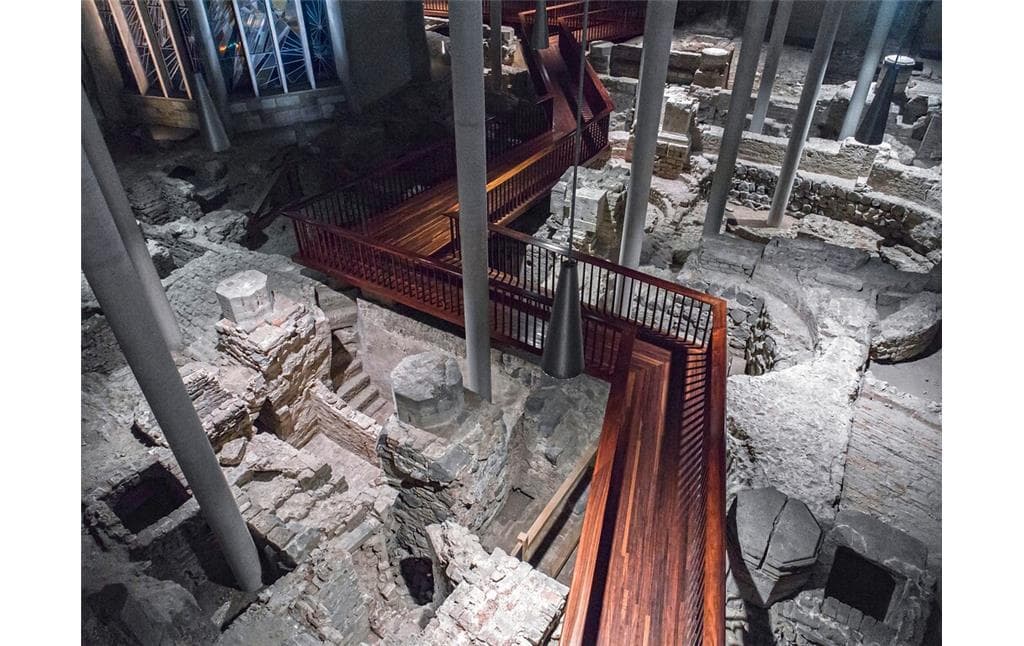
Today, the best place to see the remains is the Archaeological Garden, now incorporated into the Kaiserpfalz Franconofurd beneath the Stadthaus am Markt, right beside Frankfurt Cathedral. What makes this site special is that you can see different layers of Frankfurt's history in one place:
Roman remains, including a Roman bath from the 1st–2nd centuries
The Carolingian (Charlemagne and his successors) royal palace, including the foundations of the Aula Regia
Medieval remains, including later buildings and cellars
Together, these remains represent around 2,000 years of Frankfurt's history. The archaeological remains were opened to the public as the Archaeological Garden in the 1970s and have since been protected and incorporated into the modern Stadthaus.
History
The importance of Frankfurt increased under Charlemagne, who came here in 794 and held a major imperial assembly. His son, Louis the Pious, later expanded the royal complex with substantial stone buildings, including a large Aula Regia — the King's Hall, completed around 822. Frankfurt subsequently became an important political center of the eastern Frankish kingdom.
Archaeological Garden
Today, the best place to see the remains is the Archaeological Garden, now incorporated into the Kaiserpfalz Franconofurd beneath the Stadthaus am Markt, right beside Frankfurt Cathedral.
What makes this site special is that you can see different layers of Frankfurt's history in one place:
Roman remains, including a Roman bath from the 1st–2nd centuries
The Carolingian (Charlemagne and his successors) royal palace, including the foundations of the Aula Regia
Medieval remains, including later buildings and cellars
Together, these remains represent around 2,000 years of Frankfurt's history. The archaeological remains were opened to the public as the Archaeological Garden in the 1970s and have since been protected and incorporated into the modern Stadthaus.
Fun Facts
- The oldest buildings you can see in Frankfurt's historic center are underground. The remains preserved here are among the city's oldest surviving building remains.
- You are standing where European politics once happened. Under Charlemagne and his successors, this was not simply a residence—it was a place where important decisions affecting a huge part of Europe were made.
- The site tells the entire origin story of Frankfurt. Roman settlement → Frankish royal court → Carolingian (Charlemagne and his successors) palace → medieval city.
- The best way to understand Frankfurt is to look down. Modern Frankfurt surrounds you, but beneath your feet are the physical remains of the city that existed more than a thousand years ago.
Guide Tips
- Don't miss the elevated walkways for the best overview of the archaeological remains.
Opening Hours
Mon: Closed, Tue-Sun: 10:00 AM - 6:00 PM