
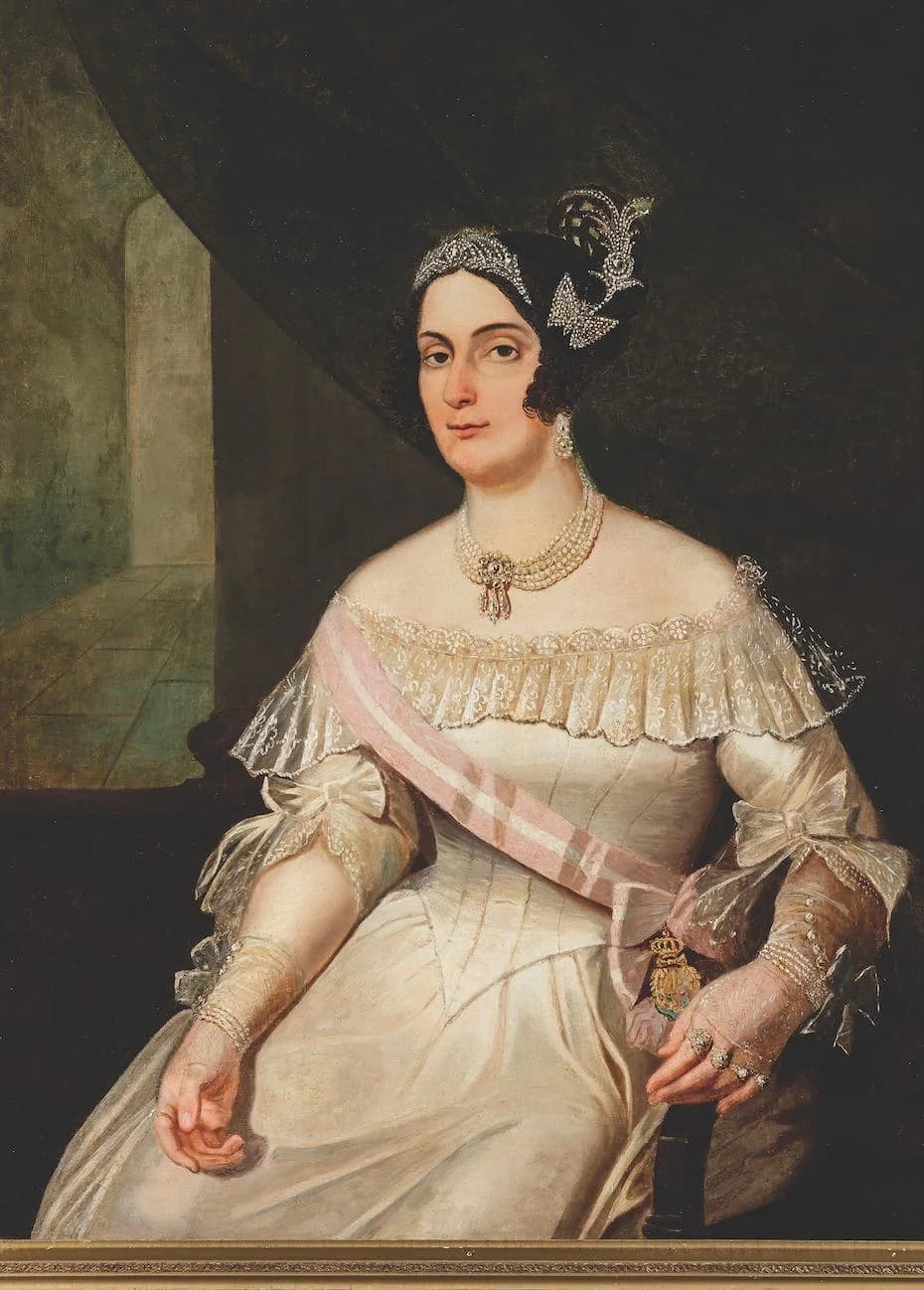
Marquesa de Santos House
Step back in time and immerse yourself in the rich history of São Paulo at the Marquesa de Santos House. This 18th-century mansion, one of the few remaining from that era, was once the home of Domitila de Castro, the Marquesa de Santos, who captivated the heart of Emperor Pedro I. Her scandalous affair with the emperor not only shook the foundations of the Brazilian Empire but also elevated her to a position of immense influence. Beyond the intrigue, this house offers a rare glimpse into the city's colonial past, with its thick rammed-earth walls and narrow streets, a stark contrast to the bustling metropolis it is today. Discover the elegance of the past and the enduring legacy of the Marquesa de Santos as you explore this historic landmark.
This is the Solar da Marquesa de Santos, one of the oldest surviving houses in São Paulo. It became famous because it was the home of Domitila de Castro, better known as the Marquesa de Santos—the longtime mistress of Emperor Pedro I, the man who declared Brazil's independence. Their relationship caused one of the biggest scandals of the Brazilian Empire, yet he still granted her a noble title and made her one of the most influential women in the country. Beyond the romance, this house also shows us what São Paulo looked like before coffee transformed it into Brazil's economic powerhouse. Thick rammed-earth walls, simple colonial architecture, and narrow streets were once the norm here.
History
Born Domitila de Castro Canto e Melo in 1797, the Marquesa de Santos became one of the most famous women in Brazilian history—not because she was empress, but because she was the longtime mistress of Emperor Pedro I, the man who declared Brazil's independence from Portugal in 1822.
Their affair began around 1822, shortly after independence, while Pedro I was still married to Empress Maria Leopoldina of Austria. The relationship quickly became public knowledge and caused a major scandal at court. Despite criticism from politicians, the Church, and the imperial family, Pedro openly favored Domitila, granting her noble titles and enormous influence.
She was eventually given the title Marchioness (Marquesa) of Santos, even though she had never lived in the city of Santos. The title was an imperial honor bestowed by Pedro I.
At the height of their relationship, Domitila was one of the most powerful women in Brazil. She attended official ceremonies, received foreign diplomats, and was widely believed to have influenced imperial appointments and political decisions. Many Brazilians viewed her as a symbol of the emperor's personal excesses and the growing disconnect between the monarchy and the public.
The affair lasted about seven years before Pedro I ended it in 1829. Two years later, after political unrest and declining popularity, he abdicated the Brazilian throne in favor of his five-year-old son, the future Pedro II, and returned to Portugal.
After the breakup, Domitila returned to São Paulo, married politician Rafael Tobias de Aguiar, one of the wealthiest men in the province, and lived much of the rest of her life in this mansion. Here she became a respected member of São Paulo society, raising her family and managing her estates until her death in 1867.
About the house:
Built: Second half of the 18th century (around the 1760s–1770s; the exact year is unknown).
Domitila (Marquesa de Santos) purchased the house: 1834.
She lived there until: 1867, the year of her death.
Opened as a museum: 1975, after restoration.
Current use: Part of the Museum of the City of São Paulo.
Fun Facts
- One of the very few 18th-century buildings still standing in downtown São Paulo.
- Built with rammed earth (taipa de pilão), the main construction technique of colonial São Paulo.
- Home of the famous Marquesa de Santos from 1834 to 1867.
- The mansion became known for elegant receptions attended by São Paulo's aristocracy.
Guide Tips
- Visit the Museum of the City of São Paulo to learn more about the history of São Paulo.
- Take a guided tour to understand the significance of the Marquesa de Santos in Brazilian history.
- Explore the surrounding area to see more colonial architecture and narrow streets.
Opening Hours
Mon: Closed, Tue-Sun: 9:00 AM - 5:00 PM