
Conciergerie
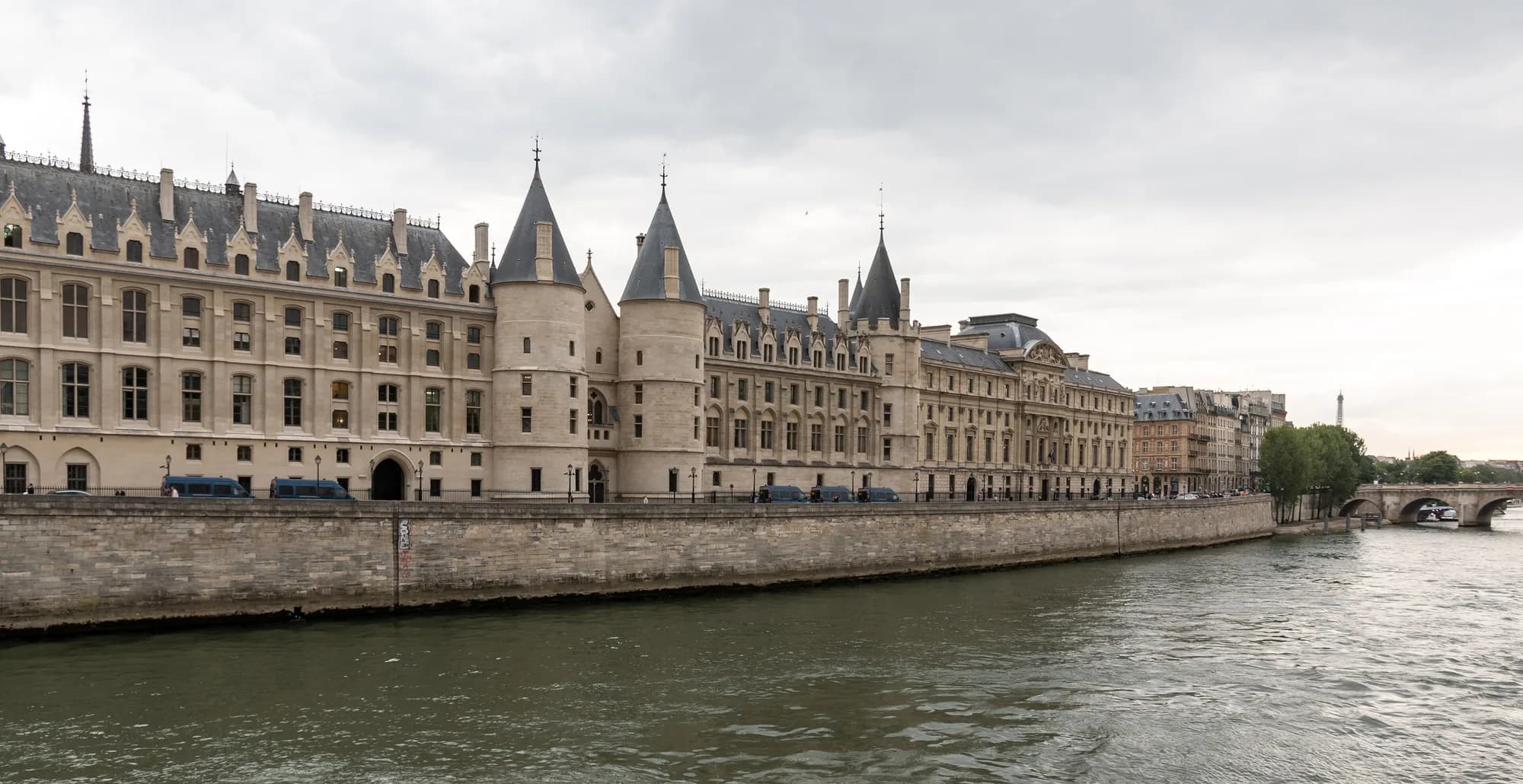
Stretching dramatically along the northern embankment of the Île de la Cité on Quai de l'Horloge, the Conciergerie is one of Paris's most imposing medieval architectural treasures. Originally part of the Palais de la Cité—the first royal seat of the Kings of France from the 10th to the 14th centuries—the monumental riverside fortress retains four magnificent medieval stone towers: the 47-meter Tour de l'Horloge (housing the oldest public clock in Paris, crafted in 1370), the twin defensive towers Tour de César and Tour d'Argent, and the Tour Bonbec. An external walking tour offers sweeping views from the Pont au Change and Quai de la Mégisserie across the Seine, showcasing the breathtaking Gothic battlements, soaring conical pepper-pot turrets, and the dazzling gilded Renaissance dial of the Grand Clock. Beyond its medieval royal splendor, the fortress holds deep historical significance as the infamous revolutionary prison where Queen Marie Antoinette, Georges Danton, and Maximilien Robespierre were held during the Reign of Terror.
Esticando-se dramaticamente ao longo da margem norte da Île de la Cité no Quai de l'Horloge, a Conciergerie é um dos tesouros arquitetônicos medievais mais imponentes de Paris. Originalmente parte do Palais de la Cité—a primeira sede real dos Reis da França do século X ao século XIV—a fortaleza monumental à beira do rio conserva quatro magníficas torres de pedra medievais: a Tour de l'Horloge de 47 metros (que abriga o relógio público mais antigo de Paris, construído em 1370), as torres gêmeas defensivas Tour de César e Tour d'Argent, e a Tour Bonbec. Um passeio externo oferece vistas panorâmicas do Pont au Change e do Quai de la Mégisserie sobre o Sena, exibindo as impressionantes muralhas góticas, os imponentes torreões cônicos e o deslumbrante mostrador renascentista dourado do Grande Relógio. Além de seu esplendor real medieval, a fortaleza possui um profundo significado histórico como a infame prisão revolucionária onde a Rainha Maria Antonieta, Georges Danton e Maximilien Robespierre foram detidos durante o Reinado do Terror.
História
The site of the Conciergerie has formed the nerve center of power in Paris since antiquity, when Roman governors established a fortified praetorium on the Île de la Cité. Under the Capetian dynasty, King Robert II the Pious built the first formal royal palace here in the 10th century. Between 1302 and 1314, King Philip IV 'the Fair' (Philippe le Bel) transformed the complex into a monumental Gothic palace of unmatched grandeur, erecting the Hall of the Men-at-Arms, the Guardroom, and the formidable riverside towers along the Seine to demonstrate the prestige and centralized authority of the French monarchy.\n\nFollowing the bloody uprising of Parisian merchants led by Étienne Marcel in 1358, the young Dauphin (later King Charles V) abandoned the palace for the greater safety of the Louvre and Hôtel Saint-Pol. The administration of the palace was entrusted to a royal steward—the Concierge—while the complex became the permanent headquarters of the Parlement de Paris, the kingdom's highest sovereign court of justice. Gradually, the palace's vaulted lower chambers were repurposed into a central judicial prison.\n\nDuring the French Revolution, the Conciergerie gained worldwide notoriety as the primary detention center for the Revolutionary Tribunal during the Reign of Terror (1793–1794). More than 2,700 prisoners were tried and sentenced to death here, including Queen Marie Antoinette, Madame Roland, the Girondin deputies, and eventually the architects of the Terror themselves, Georges Danton and Maximilien Robespierre. Following the Bourbon Restoration and 19th-century restorations by architects Antoine-Nicolas Bailly and Louis-Joseph Duc, the Conciergerie was designated a Historical Monument in 1862 and opened to the public as a national museum in 1914, remaining a powerful symbol of French royal legacy, Gothic architecture, and revolutionary history.
Curiosidades
- ⏰ O Relógio Público Mais Antigo de Paris: Encomendado em 1370 pelo Rei Carlos V e instalado na Tour de l'Horloge de 47 metros, o relógio monumental foi o primeiro relógio público da cidade de Paris, apresentando um suntuoso mostrador dourado esculpido em 1585 por Germain Pilon com figuras alegóricas da Lei e da Justiça.
- 👑 O Domínio Real do Concierge: Quando o jovem Delfim (mais tarde Rei Carlos V) abandonou o palácio para a maior segurança do Louvre e do Hôtel Saint-Pol em 1358, ele nomeou um governador de alto escalão chamado 'Concierge' para administrar o palácio e manter a justiça real, o que deu ao marco seu nome duradouro.
- 🏰 A Maior Sala Medieval da Europa: Sob a fortaleza encontra-se a lendária Sala dos Homens de Armas (Salle des Gens d'Armes), uma obra-prima gótica com 1.785 metros quadrados e 64 pilares abobadados, construída entre 1302 e 1313 sob o Rei Philippe IV (Filho do Rei).
- 🗣️ A Torre de Tortura 'Cantora': A torre mais ocidental, Tour Bonbec ('bom bico'), derivou seu apelido de abrigar a câmara de tortura medieval, onde as interrogações eram projetadas para fazer os prisioneiros 'cantar' (confessar).
- ⚖️ Porta de Entrada para a Guilhotina: Durante a Revolução Francesa (1793–1794), o Tribunal Revolucionário realizou julgamentos aqui; 2.781 prisioneiros condenados—mais famosamente a Rainha Maria Antonieta—passaram seus últimos dias dentro de suas paredes antes de serem levados para a guilhotina.
- seoTitle="Conciergerie: Tesouro Medieval em Paris", seoDescription="Descubra a Conciergerie, um marco histórico em Paris com torres medievais, relógio antigo e história revolucionária.", guideTipsLocalized=[
- 📸 Melhores Locais para Fotografia: Para o clássico panorama postal de todas as quatro torres refletidas no Sena, fique do outro lado do rio no Quai de la Mégisserie ou no meio do Pont au Change.
- ⏰ Admire os Detalhes do Relógio: Suba até a esquina da Boulevard du Palais e do Quai de l'Horloge para olhar para cima nos intrincados dizeres em latim, as flores-de-lis douradas e as figuras esculpidas do mostrador do relógio real do Rei Henrique III.
- 🌅 Pôr do Sol e Iluminação Noturna: À noite, as luzes arquitetônicas quentes iluminam as torres de calcário e o mostrador do relógio dourado, oferecendo um contraste mágico contra as águas escuras do Sena.
- 🚶 Caminhada Histórica na Ilha: Combine sua visita externa com a vizinha Sainte-Chapelle, a Place Dauphine na ponta oeste da Île de la Cité e o Pont Neuf.
Horário de funcionamento
24/7 - External Visit / Quayside & Pont au Change Viewing (Monument interior visit: daily 09:30 - 18:00)