
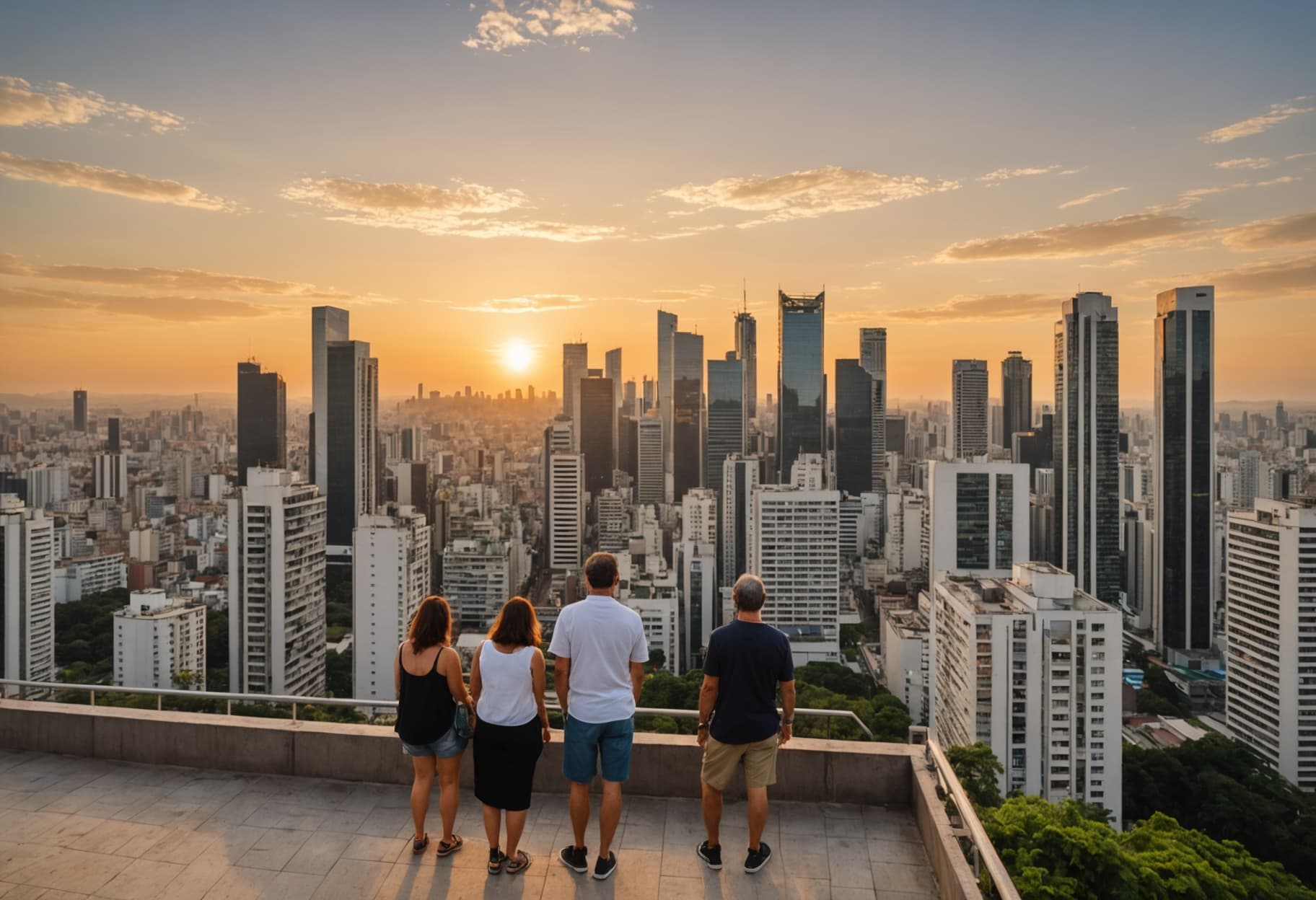
How Dangerous Is São Paulo? An Honest Guide
Is São Paulo dangerous for tourists? The honest answer: far less than its reputation, if you know where to go, what to watch for, and how to move around.
- sao-paulo
- safety
- travel-tips
- first-time-visitors
- brazil
- self-guided-tours
- walking-tours
If you have typed "how dangerous is São Paulo?" into a search bar, you are probably somewhere between excited and nervous. You have heard the stories. You have read the warnings. And you are wondering whether Brazil's biggest city is a place to explore or a place to avoid.
Here is the short, honest answer: São Paulo is a huge, busy, real city, and it is far more manageable than its reputation suggests. Millions of people live, work, eat and go out here every day. Visitors who plan a little, stay aware, and use common sense have a great time. The risks are real, but they are specific, predictable and avoidable.
This guide tells you what actually goes wrong, where, and how to avoid it, without scaring you or sugar-coating anything.
So, how dangerous is São Paulo, really?
Think of São Paulo the way you would think of any very large global city. Most of the time, nothing happens. When something does, it is almost always opportunistic street crime, not violence aimed at tourists.
A few things are worth knowing:
- Violent crime has been falling for years. Official figures from the São Paulo state security department show homicides and robbery-murders at their lowest levels since records began in 2001, and the city of São Paulo recorded its lowest May homicide count on record in 2026. The picture is not perfectly smooth, and some categories, such as thefts, went up in 2025 in the capital, so it is wise to stay careful rather than complacent.
- The main risk is your phone. Reports from travel-safety sources describe mobile phones as the target in the large majority of street robberies in the city. Thieves, sometimes on bikes or motorcycles, grab a phone from a hand or table and ride off.
- Tourists are rarely targeted for violence. Most visitors who have trouble lose a phone, a bag or some cash to a quick grab or a scam, not to anything worse.
- Official advice is "be careful", not "stay away". Brazil sits at a "exercise increased caution" level in US government advice, and São Paulo's main tourist areas are open and busy. Check your own government's travel advice before you go, because it is updated regularly.
The takeaway: São Paulo rewards the prepared traveller. Preparation is not complicated.
Which parts of São Paulo are fine, and which need more care?
Like any big city, São Paulo is a patchwork. Some neighbourhoods are relaxed and tourist-friendly. Others are better visited with a guide, in daylight, or not at all.
Generally comfortable for visitors
- Avenida Paulista and surroundings. The city's main cultural avenue, with museums, cafés and heavy foot traffic and police presence during the day.
- Jardins and Pinheiros. Leafy, upscale areas with good restaurants and plenty of hotels.
- Vila Madalena. Known for street art, bars and nightlife, which is lively and best enjoyed with some awareness at night.
- Liberdade. São Paulo's Japanese-Brazilian quarter, popular on weekends for its markets and food.
Worth extra care
- The historic centre after dark. The downtown core, around the Sé Cathedral, Luz station and the nearby streets, is full of history and well worth seeing, but it empties out in the evening and is better explored in the morning and daytime.
- Areas around Luz and the so-called "Cracolândia". This part of downtown has long had a heavy street-drug presence. Phone theft is a documented problem around the Luz station and nearby museums, and you should simply not wander here on your own.
- Public buses at night, deserted streets, and the outer suburbs. There is little reason for a visitor to go there.
None of this means downtown is off-limits. Much of São Paulo's best history, food and architecture is there. It simply means that how and when you visit it matters.
The real risks, and the simple fixes
Most problems come down to a short list of situations.
1. Phone grabs The classic São Paulo risk. Do not stand at the kerb with your phone in hand, and do not scroll while walking along busy roads. Step into a shop, café or doorway to check directions, then put the phone away. Keep it in a front pocket or zipped bag, and enable "find my phone" and a strong passcode before you travel.
2. Showing off valuables Expensive jewellery, a visible camera and a flashing watch invite attention. Dress simply and carry only what you need for the day.
3. Taxis and ride apps Use app-based rides rather than hailing a taxi on the street, check that the licence plate matches the app, and avoid unmarked cars. The same goes at the airport: book through the app or a reputable desk.
4. ATMs and cards Use ATMs inside banks or shopping centres, in daylight, and watch for people who offer "help" at the machine. Keep an eye on your card at restaurants, and consider carrying a spare card stored separately.
5. Nightlife Stick to well-known venues, keep an eye on your drink, and buy from reputable bars, since there have been recent reports of contaminated spirits in the region. Agree on how you will get home before you go out, and do not walk home alone late at night.
6. Scams and overcharging Tourist traps exist, as everywhere. Check prices on menus before you sit down, look at your bill, and be polite but firm if something does not add up.
7. The unlucky moment If someone does try to rob you, do not resist. A phone and a wallet can be replaced. Keep a small amount of cash in a separate pocket, and know that São Paulo has tourist police and English-speaking help available.
Is São Paulo safe at night? For solo travellers? For women?
- At night: Stay in busy, well-lit neighbourhoods, take rides instead of walking long distances, and avoid the centre and empty side streets after dark.
- Solo travellers: Very doable. Share your plans with someone, keep your phone charged, and choose accommodation in Paulista, Jardins or Pinheiros.
- Women travelling alone: Standard big-city precautions apply. Trust your instincts, use app rides at night, and stay in busy areas. São Paulo is also known for a large network of women's police stations.
A smarter way: let someone who knows the city show you
Here is the honest truth about São Paulo safety: most of the risk comes from not knowing the city. Which streets are fine at 10 a.m. but quiet at 6 p.m. Where the pickpockets work. Which route between two sights is busy and comfortable, and which one cuts through somewhere you would rather avoid. A local resident knows all of this. A first-time visitor with a phone full of map pins does not.
That is why a guide, or a self-guided tour built around a safe route, is the simplest answer to the whole "is it dangerous?" question.
With a local guide, someone walks beside you. They know the city, they choose the route and the timing, they know which areas to skip, and they handle the tricky bits for you: where to meet, how to get between stops, where to eat. You can look up at the buildings instead of over your shoulder. A local also brings the stories and context you will never get from a guidebook.
With a self-guided tour, you walk at your own pace with your phone as your guide, but the route has been planned for you in advance. The stops, the order, and the streets between them are chosen to keep you on busy, comfortable paths, and many of our routes start in the morning, when the city centre is at its most lively. You get independence with a safety net.
Either way, you swap guesswork for a plan.
Explore São Paulo with confidence
Whether you want a local at your side or a safe route in your pocket, here are ways to see the city's best sides.
With a guide
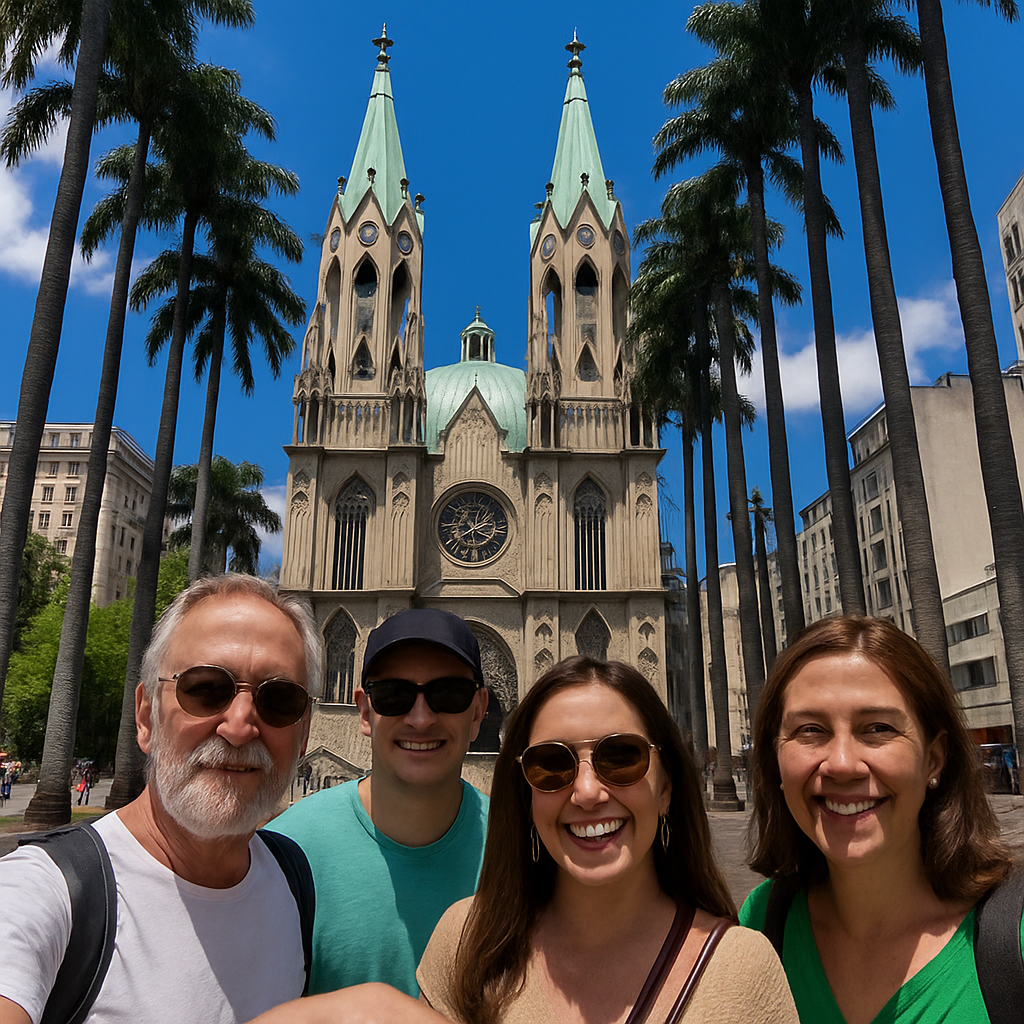
- São Paulo Private Downtown Walking Tour, with optional food stops. A relaxed, flexible walk through the historic centre with a certified local guide who is born and raised in the city. You will see Liberdade, the Sé Cathedral area, Pátio do Colégio, the financial district and the Municipal Market, and taste local favourites like coxinha, pastel and brigadeiro along the way. The route sticks to well-known areas, and your guide leads you every step.
Self-guided, with a safe route on your phone
- São Paulo Downtown Food Trail: Taste the City's History. A morning-friendly walk through the old centre, stopping at markets, bakeries and classic snack counters, with GPS directions and stories on your phone.
- São Paulo Downtown: History and Coffee. The story of how coffee built São Paulo, told stop by stop through the historic heart of the city, ending with a coffee tasting.
- São Paulo in Color: Murals of Paulista and Consolação. A street-art route through two of the city's liveliest neighbourhoods, at your own pace.
Browse all our São Paulo tours, pick the style that suits you, and book in a few clicks. Your first day in the city is better spent enjoying it than worrying about it.
A quick checklist before you go
- Check your government's latest travel advice for Brazil
- Buy travel insurance that covers theft and medical costs
- Enable "find my phone" and a strong screen lock
- Keep a copy of your passport and card numbers separate from the originals
- Book your first-night accommodation in Paulista, Jardins or Pinheiros
- Pre-book a tour for your first day, so you start the trip with local knowledge
The bottom line
São Paulo is not a city to fear. It is a city to prepare for, and the preparation is easy. Know the few real risks, avoid the few tricky situations, and walk with someone who knows the way, in person or through a well-planned route. Do that, and you will find what millions of visitors already have: one of the most exciting, delicious and surprising cities in the world.
Safety information is general and can change. Always check current advice from your government and local authorities before and during your trip.
Sources consulted: São Paulo State Public Security Secretariat (SSP-SP) crime statistics as reported by Brazilian media, 2025 and 2026; World Nomads São Paulo safety guide; Berkshire Hathaway Travel Protection Brazil safety guide; US State Department Brazil advisory summaries.
Comments
Loading comments...
Related Stories
Açaí in São Paulo: What It Is, How Locals Eat It, and Where to Try It
Thick, cold, purple and nothing like the smoothie bowl back home. Here is how açaí became a São Paulo habit, how to order it, and where to try it.
6 min read
Street Art in Vila Madalena: São Paulo Beyond the Postcards
Beco do Batman and the streets around it — where to find the murals, when the light is best, and how to pair it with galleries and coffee.
1 min read
An Afternoon in Liberdade: São Paulo’s Japan Town
Suzuran lanterns, weekend street food, and quiet side streets — how to spend an afternoon in the largest Japanese neighborhood outside Japan.
1 min read
Explore São Paulo
Browse by category
Guided tours
Led by hosts who live here · São Paulo
São Paulo Private Downtown Walking Tour. Optional Food Stops
Dive into São Paulo’s city center (private or group tour), savor a variety of local foods, discover hidden gems, and explore iconic landmarks with a friendly, certified local guide by your side! Certified Tour Guide – CADASTUR - Brazil Olá! I’m Thiago, born and raised in São Paulo. It would be a pleasure to welcome you to my city and show you the best of São Paulo through the eyes of a local. This is more than just a walking tour — it’s a deep, authentic dive into São Paulo’s culture, food, history, and street life, with real stories and hidden corners you won’t find in any guidebook. I’ll make sure your experience is fun, flexible, safe, and unforgettable. What Makes This Tour Special: - A flexible, relaxed experience tailored to your interests - Safety first: We’ll stick to well-known areas, avoid risky zones, and I’ll guide you every step of the way How It Works: Private: I can pick you up at the hotel on foot if it's close to a metro station, and then we can take the metro together to the first stop. Otherwise, I kindly ask that you take an Uber to the meeting point - MASP on Paulista Ave. We’ll taste some of the most delicious local foods and drinks in Brazil, with a variety of options to choose from, such as: - a refreshing and delicious cupuaçu juice from the Amazon - pastel with sugarcane juice, São Paulo’s favorite combo - chicken coxinha with catupiry and a brigadeiro for dessert - a variety of fresh tropical fruits to sample - the famous mortadella sandwich with a local beer - peanut paçoca - or even a traditional everyday meal like rice, beans, and meat. Food and drink costs are not included, so you’ll be free to choose whatever you’d like along the way. We’ll explore must-see attractions and historic sites: - Japan Town - Liberdade. The largest Japanese community outside Japan - The impressive Sé Cathedral and surrounding historical landmarks - Pátio do Colégio – the exact spot where São Paulo was founded - The financial district and the São Paulo Stock Exchange - The Santander Lighthouse observatory for breathtaking city views (closed on mondays) - The energetic and chaotic March 25 Street Market — a local favorite for bargains and people-watching - Charming colonial architecture, lively street scenes, and plenty of photo opportunities - A stop at the iconic Municipal Market to try famous foods And many other possibilities along the way. The itinerary may change depending on the day, due to weather or local conditions such as construction and other unforeseen factors. Type: Walking tour with subway transport (optional) Safety: Guided route through safe areas; local guide support at all times Best for: First-time visitors, food lovers, history buffs, photographers This tour will give you real local insight, great food, and memorable stories, all with comfort and security. The experience is flexible, relaxed, and fun, with no rush and no stress. Just bring your curiosity, a camera, and your appetite — and let’s explore the best of São Paulo together!
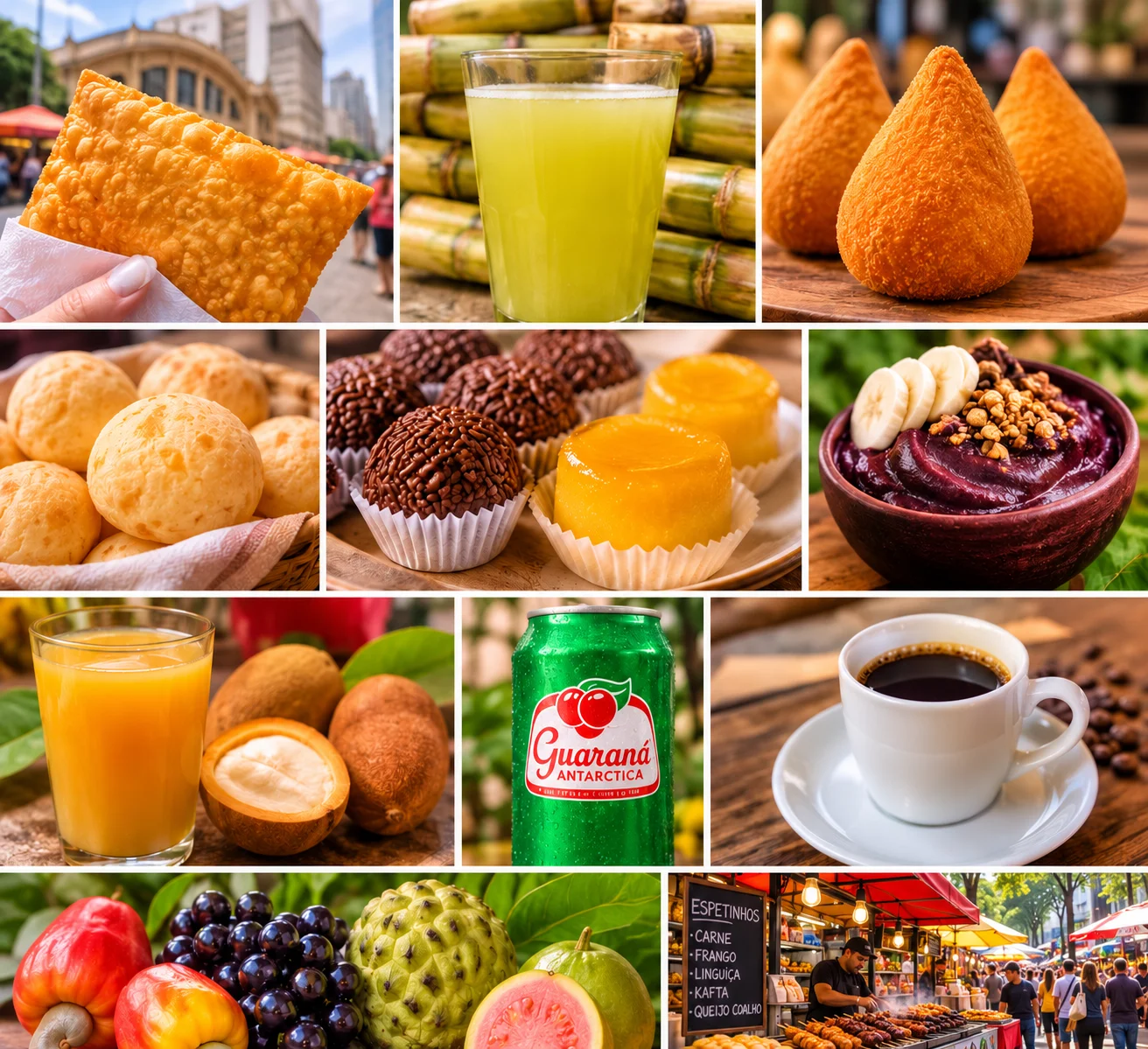

São Paulo Street Food Tour: Taste the City Like a Local
# São Paulo Street Food Tour: Taste the City Like a Local **Discover São Paulo one bite at a time in a small-group experience!** Join us on a delicious journey through the streets of Brazil's largest city, where every snack, sweet, and drink has a story to tell. Designed for a small group, this experience offers a more personal and relaxed way to explore São Paulo, connect with fellow travelers, and discover authentic Brazilian flavors. Led by a local guide, you'll go beyond the typical tourist spots to discover the foods Brazilians grow up with and enjoy every day. **Taste some of Brazil's most beloved specialties:** - **Pastel & Sugarcane Juice** – A crispy, freshly fried pastry paired with refreshing sugarcane juice, a classic Brazilian street food combination. - **Coxinha** – Brazil's famous crispy chicken croquette, a favorite at local bakeries and snack bars. - **Pão de Queijo** – Warm, soft Brazilian cheese bread with an irresistible cheesy flavor. - **Brigadeiro & Quindim** – Two traditional Brazilian sweets, one made with chocolate and condensed milk, the other with coconut and egg yolks. - **Açaí & Cupuaçu Juice** – Discover two unique Amazonian fruits and their tropical flavors. - **Guaraná Soda** – Try Brazil's iconic soft drink, made with the flavor of the Amazonian guaraná fruit. - **Brazilian Coffee** – Experience Brazil's rich coffee culture and discover its importance to São Paulo's history. - **Exotic & Seasonal Brazilian Fruits** – Discover Brazil's incredible fruit diversity with a tasting of fresh fruits such as caju (cashew apple), jabuticaba (Brazilian grape), atemoya, and guava, along with other seasonal surprises. Depending on availability, you'll get to experience unique textures, aromas, and flavors rarely found outside Brazil. **More than just a food tour** Along the way, explore lively streets, traditional bakeries, local markets, and hidden food spots while learning about the cultural influences that shaped Brazilian cuisine. Discover how Indigenous traditions, African heritage, Portuguese influences, and generations of immigrants helped create São Paulo's unique food culture. With a small group, there's more time to ask questions, share discoveries, interact with your guide, and enjoy each tasting without feeling rushed. Whether you're a curious foodie, a solo traveler, or simply want to experience the real Brazil, this tour is the perfect introduction to São Paulo's flavors and traditions. **Come hungry, leave happy, and experience São Paulo like a local!** *Food and fruit selections may vary depending on seasonal availability and the establishments visited.*