
Île de la Cité
Imagine stepping back in time as you wander through the historic heart of Paris, Île de la Cité. This natural island in the Seine River is not just a geographical landmark but a living museum, where every corner whispers tales of ancient Celtic settlements, Roman conquests, and medieval royalty. From the serene Place Dauphine to the iconic Notre-Dame Cathedral, Île de la Cité offers a captivating journey through centuries of French history and architecture. Whether you're strolling along the oldest standing bridge in Paris or soaking in the tranquil beauty of Square du Vert-Galant, this island promises an unforgettable experience that captures the essence of Paris.
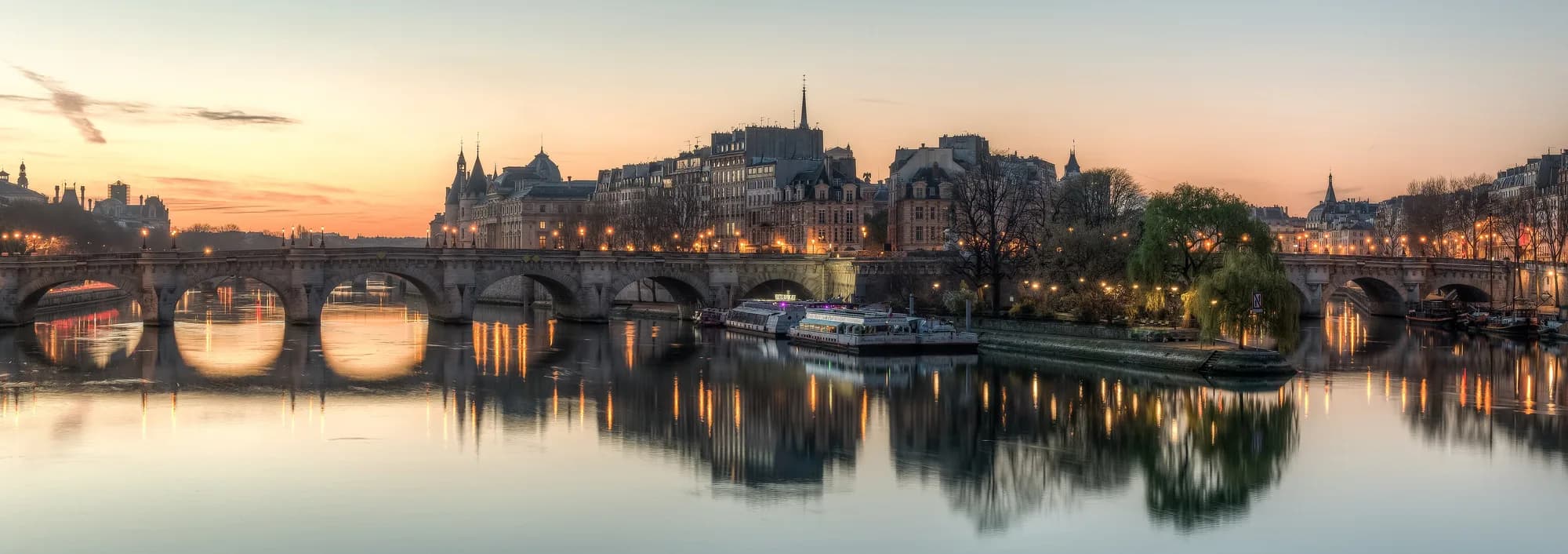
The historic cradle and geographic heart of Paris, Île de la Cité is a natural island in the Seine River that preserves over two millennia of French history, architecture, and urban life. From its origins as an ancient Celtic settlement of the Parisii tribe to the fortified Roman city of Lutetia and the medieval royal seat of French monarchs, the island concentrates many of the capital's defining landmarks. An exterior walking exploration reveals the serene 17th-century triangular Place Dauphine, the historic Pont Neuf (the oldest standing bridge in Paris), the weeping willows of Square du Vert-Galant at the western tip, and sweeping views of the medieval Palais de la Cité (Conciergerie), Sainte-Chapelle's slender spire, and Notre-Dame Cathedral.
History
Inhabited since antiquity by the Celtic Parisii tribe and subsequently fortified as Roman Lutetia, Île de la Cité served as the political, judicial, and spiritual heart of France throughout the Middle Ages. It was the residence of early French kings at the Palais de la Cité—which incorporated the Sainte-Chapelle and the Conciergerie—and the site of Notre-Dame Cathedral, begun in 1163. In the early 17th century, King Henri IV initiated major urban developments including the construction of Pont Neuf and Place Dauphine. During the 19th century, Baron Haussmann substantially reshaped the island's medieval street grid to construct grand administrative buildings, leaving the picturesque residential enclave at the western tip and preserving its role as the historic center of Paris.
Fun Facts
- The island was the original settlement where the Celtic Parisii tribe and later Roman conquerors established the city of Lutetia.
- Pont Neuf ('New Bridge'), which crosses the island's western tip, is ironically the oldest standing stone bridge in Paris, completed in 1607.
- Square du Vert-Galant at the western tip was formed by joining two small medieval islets (Île aux Juifs and Îlot de la Gourdaine) to Île de la Cité.
- Place Dauphine was the second planned royal square in Paris, commissioned by King Henri IV in 1607 and known for its distinctive triangular layout.
- In the open square (parvis) in front of Notre-Dame sits 'Point Zéro des Routes de France', the bronze marker from which all highway distances in France are measured.
Guide Tips
- Take a classic walking loop: begin at Pont Neuf, pass through the tranquil haven of Place Dauphine, descend the steps to the water at Square du Vert-Galant, and stroll along Quai de la Corse and Quai aux Fleurs.
- Place Dauphine is an ideal spot to relax at a quiet café terrace away from the main tourist flows.
- Visit during golden hour or early morning when the sunlight reflects off the Seine and highlights the stone façades and bridges.
- For the best panoramic shots of the island's prow, stand on the Pont des Arts looking east or from the Left Bank quays near Pont Saint-Michel.
Opening Hours
Open 24/7 (Public island and riverside quays). Individual monuments, gardens, and facilities maintain their own operating hours.