
Moulin Rouge
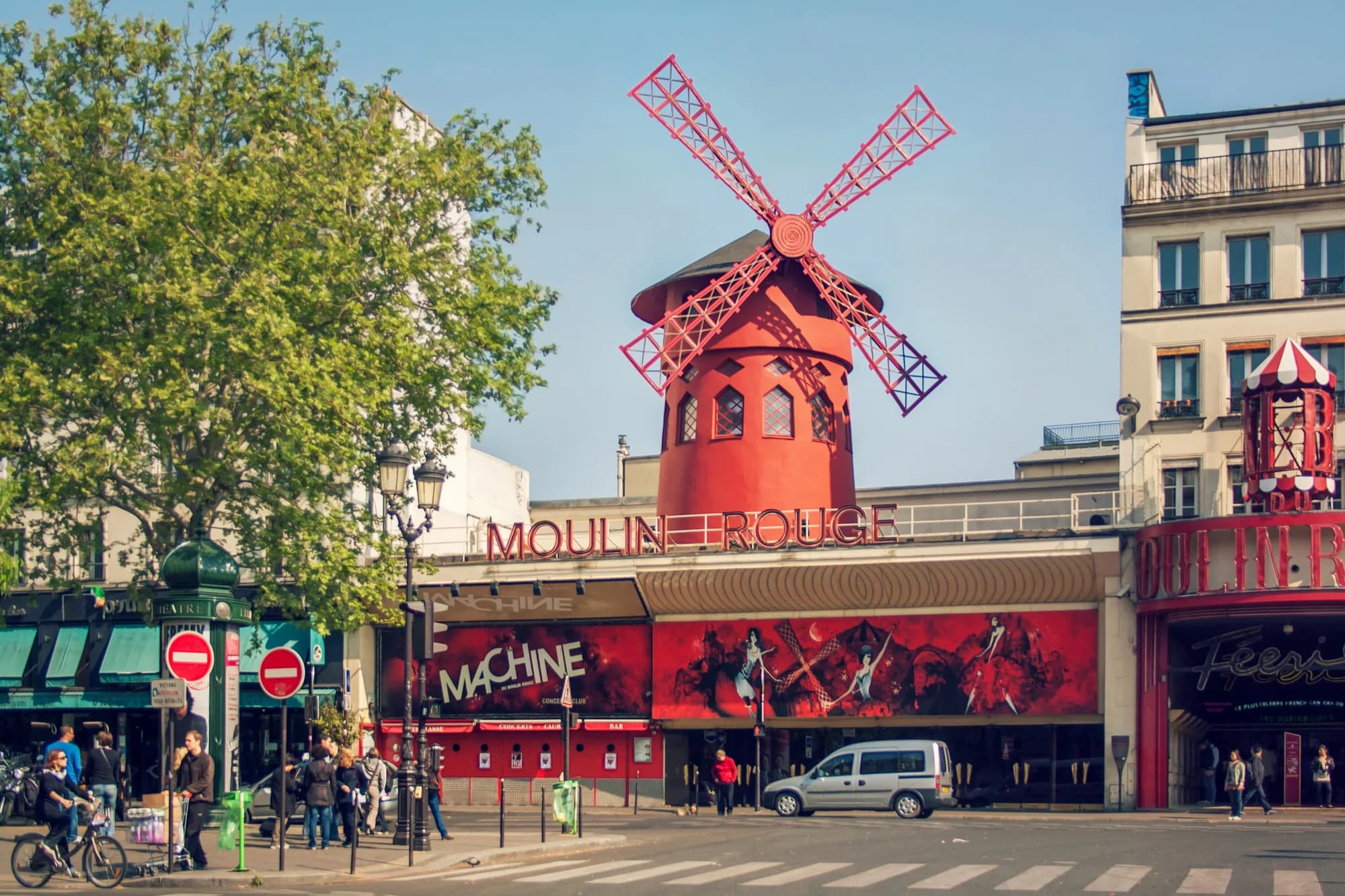
Step into the dazzling world of the Moulin Rouge, Paris' most iconic cabaret, where the spirit of the Belle Époque lives on. Perched at the foot of Montmartre hill, this legendary venue has been a beacon of Parisian nightlife since 1889, captivating audiences with its extravagant shows and the iconic red windmill that graces its rooftop. As you enter, you'll be transported back in time to an era of opulence and artistic brilliance, where the can-can dance was born and Henri de Toulouse-Lautrec immortalized its performers in his post-impressionist masterpieces. Whether you're here to witness a contemporary revue or simply to soak in the electric atmosphere, the Moulin Rouge promises an unforgettable experience steeped in history and glamour.
Located at the foot of Montmartre hill on Boulevard de Clichy in Paris's lively 18th arrondissement, the Moulin Rouge is the world's most renowned cabaret and a legendary cultural icon of the Parisian Belle Époque. Founded in October 1889 by Joseph Oller and Charles Zidler—the same year the Eiffel Tower was erected—the venue was conceived as a luxurious 'palace of dance and women' where bourgeois patrons, bohemians, artists, and international visitors mingled beneath the glow of its revolutionary electric lights. Instantly recognizable by its iconic rooftop red windmill (designed by Adolphe Willette as an homage to the historic windmills that once dotted the Montmartre hillside), the Moulin Rouge revolutionized modern theatrical entertainment and gave birth to the French can-can in its most exhilarating, acrobatic form. Immortalized in the vibrant post-impressionist paintings and posters of Henri de Toulouse-Lautrec, the venue remains a thriving epicenter of Paris nightlife, staging lavish revues featuring elaborate feather-and-rhinestone costumes, virtuoso dancers, and dazzling stagecraft.
History
The Moulin Rouge opened its doors on October 6, 1889, during the euphoria of the Exposition Universelle that celebrated the centennial of the French Revolution. Co-founders Joseph Oller and Charles Zidler sought to create a revolutionary entertainment hall that broke social barriers, creating an opulent ballroom with a garden adorned with a giant stucco elephant where people from all social classes could intermingle.
The cabaret quickly became the birthplace of the modern can-can dance, popularized by legendary performers such as La Goulue (Louise Weber), Jane Avril, Valentin le Désossé, and Yvette Guilbert. Post-Impressionist painter Henri de Toulouse-Lautrec was a regular patron and created immortal advertising posters that captured the intoxicating energy of the cabaret and elevated commercial poster art into high culture.
Tragically destroyed by a devastating fire on February 27, 1915, the Moulin Rouge was meticulously rebuilt after World War I under the direction of architect Édouard-Jean Niermans and reopened in 1921. Throughout the 20th century, the stage hosted international legends including Mistinguett, Maurice Chevalier, Édith Piaf, Yves Montand, Frank Sinatra, and Liza Minnelli. Today, the venue continues its unbroken tradition of glamorous revues, attracting hundreds of thousands of spectators each year to the historic heart of Paris's bohemian entertainment district.
Fun Facts
- Birthplace of the French Can-Can: The Moulin Rouge popularized the French can-can into a worldwide sensation, transforming an energetic working-class quadrille into an iconic theatrical art form characterized by high kicks, splits, and swirling ruffled skirts.
- Toulouse-Lautrec's Muse: Aristocratic painter Henri de Toulouse-Lautrec held a reserved table every evening at the cabaret, creating some of his most famous masterpieces and groundbreaking lithographic posters depicting performers like La Goulue and Jane Avril.
- Early Adoption of Electricity: When it opened in 1889, the Moulin Rouge was one of the very first public buildings in Paris fully illuminated by electricity, creating a dazzling nighttime spectacle on Boulevard de Clichy that earned Paris the moniker 'City of Light'.
- The Garden's Giant Elephant: In its original 1889 design, the cabaret's outdoor garden featured a monumental three-story stucco elephant salvaged from the Universal Exposition, containing a spiral staircase inside its leg leading to a private belly-dancing salon.
- Hollywood & Pop Culture Phenomenon: The legendary cabaret has inspired numerous cinematic classics, most notably Baz Luhrmann's award-winning 2001 musical film 'Moulin Rouge!' and subsequent Broadway and West End stage adaptations.
Guide Tips
- Best Exterior Photo Spot: Stand across Boulevard de Clichy on the central pedestrian median near Place Blanche for an unobstructed wide-angle shot framing the entire red windmill and neon marquee.
- Nighttime Atmosphere: Visit after dusk when the neon signage and windmill blades are brightly illuminated, casting a warm red glow across the boulevard.
- Easy Transit Access: The cabaret sits directly outside Blanche métro station (Line 2) and is only a short 5-minute walk from Pigalle station (Lines 2 and 12).
- Neighborhood Stroll: Pair your visit with a walking exploration up the cobblestone streets of Montmartre toward Place des Abbesses, the 'I Love You' Wall (Le Mur des Je t'aime), and the Sacré-Cœur Basilica.
Opening Hours
24/7 - External Viewing (Shows & Dinner: Daily 19:00 - 01:00; Box Office: Daily 09:00 - 23:00)