
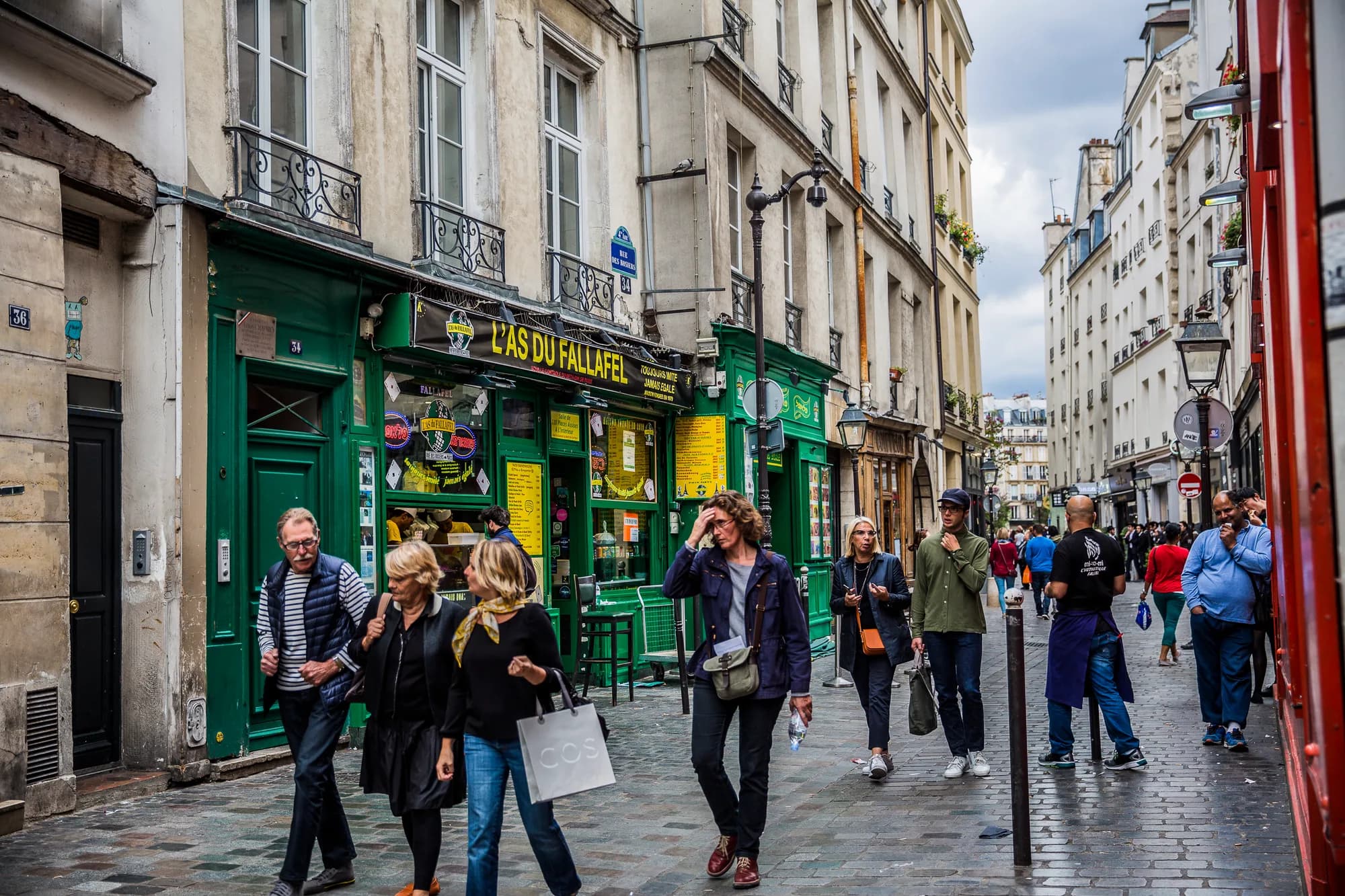
Rue des Rosiers
Imagine wandering through a living museum where every corner tells a story of resilience, culture, and culinary delight. Welcome to Rue des Rosiers, the 'Street of the Rosebushes', nestled in the heart of Paris's historic Marais district. This charming, narrow cobblestone street is not just a walk through time but a vibrant celebration of Jewish heritage, dating back to the 13th century. As you stroll down Rue des Rosiers, you'll be enveloped in the rich tapestry of Ashkenazi and Sephardic traditions, from the aroma of freshly baked challah and rugelach wafting through the air to the picturesque pastel facades adorned with Hebrew lettering. Whether you're savoring a world-renowned falafel or taking a peaceful respite in the hidden Jardin des Rosiers–Joseph-Migneret, this street offers a unique glimpse into the soul of Paris's Jewish community, blending history with the everyday life of its residents.
Located in the heart of the historic Marais district across Paris's 4th arrondissement, Rue des Rosiers ('Street of the Rosebushes') is the cultural and culinary epicenter of Paris's Jewish heritage, known historically as 'Le Pletzl' (Yiddish for 'little place' or 'square'). Stretching between Rue Malher and Rue Vieille du Temple, this charming, narrow cobblestone thoroughfare dates back to the 13th century when it ran alongside the medieval city wall of King Philippe Auguste. Today, Rue des Rosiers presents a vibrant blend of old-world Ashkenazi and Sephardic traditions, celebrated kosher delicatessens, heritage bakeries, falafel counters, independent fashion boutiques, and quiet historic courtyards. Strolling down Rue des Rosiers immerses visitors in a sensory feast—from the aroma of freshly baked challah, rugelach, and roasted pita to the picturesque pastel facades, Hebrew lettering, and leafy hidden garden oases such as the Jardin des Rosiers–Joseph-Migneret.
History
Rue des Rosiers holds more than eight centuries of Parisian urban and social history. The street was established around 1230 along the exterior perimeter of King Philippe Auguste's medieval city wall, which protected Paris against external invasions. As early as the 13th century, a Jewish community formed in the surrounding Marais district, establishing synagogues, schools, and markets.\n\nThroughout the late 19th and early 20th centuries, significant waves of Ashkenazi Jewish immigrants fleeing pogroms in Eastern Europe (Poland, Romania, Russia, and Ukraine) arrived in Paris and settled in the neighborhood, giving it the affectionate Yiddish moniker 'Le Pletzl' (little square). In the 1950s and 1960s, the community was further enriched by the arrival of Sephardic Jews from North Africa (Tunisia, Algeria, and Morocco), introducing vibrant Mediterranean culinary traditions such as falafel, shawarma, and sweet oriental pastries.\n\nDuring World War II and the German occupation of Paris, the Pletzl suffered devastating losses during the deportations; numerous commemorative plaques along the street memorialize victims and heroic resistance figures. Since the late 20th century, Rue des Rosiers has retained its deep spiritual and cultural identity while evolving into one of Paris's most stylish, walkable pedestrian shopping and dining corridors.
Fun Facts
- Medieval Rosebushes: The street took its poetic name in the early 13th century from the wild rosebushes that grew in gardens alongside the stone ramparts of King Philippe Auguste's defensive city wall.
- Global Capital of Falafel: Rue des Rosiers is world-famous for its fierce and friendly culinary rivalry among iconic falafel houses, most notably L'As du Fallafel, Mi-Va-Mi, and Chez Marianne, serving thousands of pita sandwiches daily.
- The Historic Pletzl: Since the late 19th and early 20th centuries, waves of Jewish immigrants fleeing persecution in Eastern Europe and North Africa settled here, establishing Paris's vibrant Yiddish-speaking cultural enclave.
- Secret Marais Oasis: Hidden behind the facades at No. 10 lies the entrance to Jardin des Rosiers–Joseph-Migneret, a serene 2,000-square-meter public garden linking the historic courtyards of private 17th-century mansions.
- Philippe Auguste's Wall: Remnants of Paris's 12th-century medieval defensive ramparts and watchtowers can still be spotted tucked between buildings along the street's southern edge.
Guide Tips
- Falafel Line Strategy: If ordering takeaway from L'As du Fallafel, pay the street cashier first and hold your ticket for speedy service at the window, or visit between 15:00 and 17:00 to avoid the peak rush.
- Taste Heritage Bakeries: Stop by Boulangerie Murciano (No. 14) or Florence Kahn (No. 24) for authentic poppy seed strudel, rogalech, cheesecake, and pastrami sandwiches.
- Explore the Hidden Garden: Take a restful break in the tranquil Jardin des Rosiers–Joseph-Migneret (access next to No. 10), honoring a heroic Paris school principal who saved Jewish children during WWII.
- Best Visiting Days: Sunday is the liveliest day on Rue des Rosiers with full pedestrianization and bustling street life, while Friday evening to Saturday dusk sees many kosher shops closed for Shabbat.
Opening Hours
24/7 - Public Pedestrian Street (Boutiques and eateries typically open Mon-Thu & Sun 10:00 - 23:00, Fri until early afternoon; many Jewish businesses closed Fri sunset to Sat sunset)