
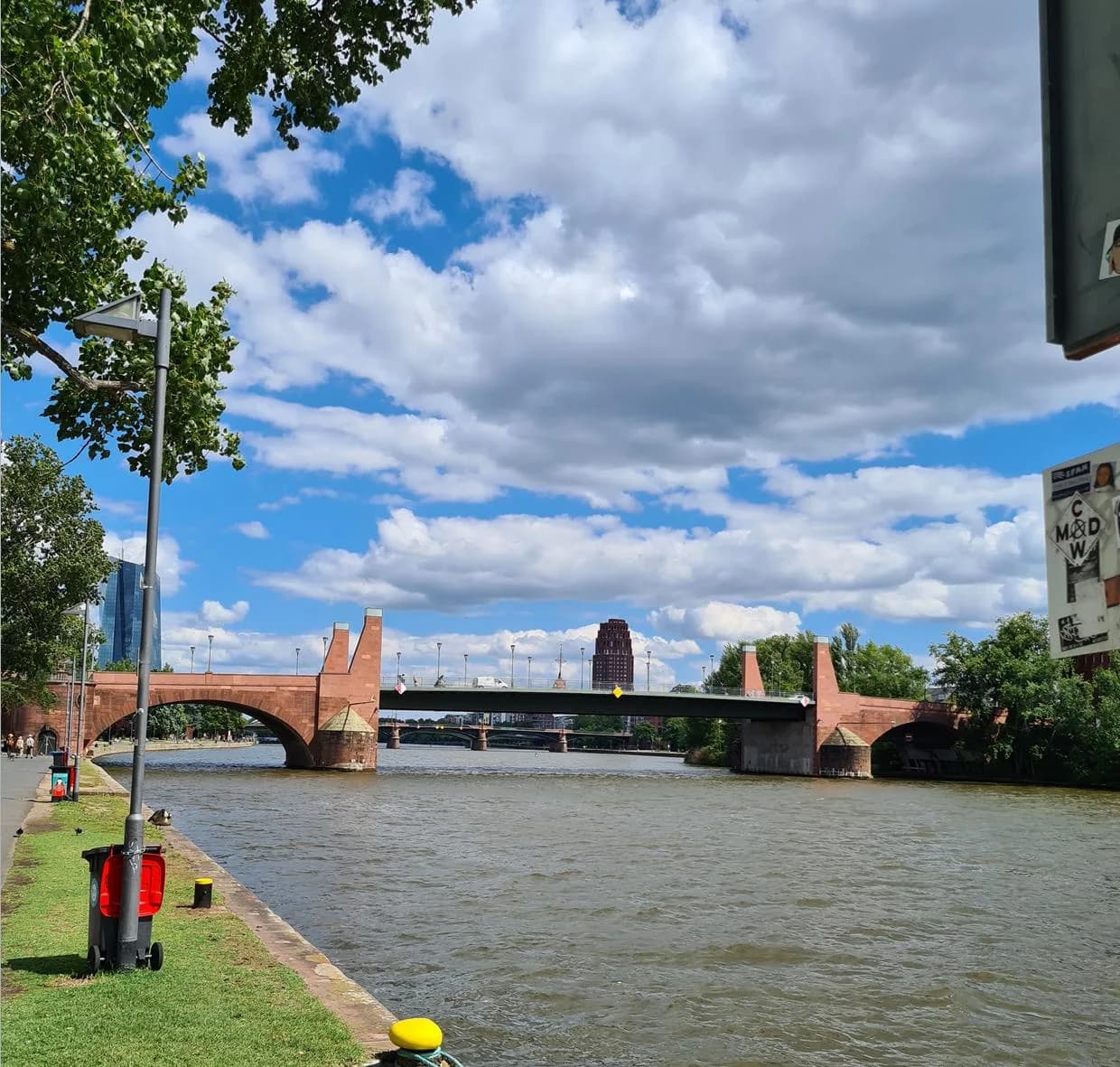
Alte Brücke (The Oldest Bridge)
¿Te imaginas cruzar el río Main en un puente que ha sido testigo de siglos de historia? La Alte Brücke, el puente más antiguo de Frankfurt, te invita a explorar su rica historia y su impresionante arquitectura. Desde su construcción en 1222, este puente ha sido un punto clave en la vida de la ciudad, conectando dos orillas y permitiendo el flujo constante de personas y mercancías. Sumérgete en la historia de Frankfurt y descubre por qué la Alte Brücke es un símbolo de la ciudad. La Alte Brücke no solo es un puente; es un viaje al pasado. Imagina cruzar este puente y sentir la historia bajo tus pies. Conoce la importancia que tuvo en el desarrollo de Frankfurt como centro comercial y estratégico. La Alte Brücke es más que una estructura; es una pieza vital en la evolución de la ciudad, desde un simple vaguada hasta convertirse en un puente monumental. Prepárate para una experiencia única en la Alte Brücke.
La Alte Brücke es el puente más antiguo y documentado de Frankfurt, construido sobre el río Main. Su primera mención data del año 1222, aunque se cree que el puente original era de madera. La estructura actual, de piedra, se desarrolló a través de reconstrucciones y ampliaciones posteriores. Este puente ha sido fundamental en la historia de Frankfurt, conectando el centro histórico en la ribera norte con Sachsenhausen en la ribera sur. Durante siglos, fue la conexión más importante de la ciudad sobre el Main y una de las rutas principales a través de Frankfurt. Antes de la construcción del puente, la gente cruzaba el río utilizando el vaguada natural. La construcción del puente permitió un cruce más confiable, especialmente para el creciente movimiento de mercaderes, mercancías y personas. Esto transformó la movilidad en la ciudad y fortaleció la posición de Frankfurt como centro comercial y estratégico. Además, el puente se volvió importante para controlar el tráfico hacia la ciudad y recaudar peajes de personas y mercancías que lo cruzaban.
Historia
**Frankfurt:** Born at the Ford.
**Ford**= Shallow part of a river where people could cross on foot or on horseback.)
Frankfurt grew around a natural ford in the Main River, somewhere in the area of today's Alte Brücke (Old Bridge). We don't know the exact position of the original ford, but historians generally place the historic crossing somewhere in this part of the river.
Before there was a bridge, this shallow section of the Main allowed people, horses, and carts to cross the river. The crossing was important because Frankfurt stood at the intersection of long-distance routes connecting different parts of Central Europe. Travelers and merchants could cross the Main here and continue their journeys in different directions.
The location also had another major advantage: the Domhügel (Cathedral Hill), just north of the river, provided higher and safer ground for settlement. Over time, the combination of a useful river crossing, important routes, and protected high ground attracted people, trade, and eventually political power.
From Ford to Bridge
For centuries, the river was crossed using the natural ford. But as Frankfurt grew, relying on a shallow crossing was no longer enough. A permanent bridge made it possible to cross the Main more reliably, especially for the growing movement of merchants, goods, and people.
The Alte Brücke is Frankfurt's oldest bridge and the oldest documented bridge across the Main in the city. It is first mentioned in a document from 1222. The earliest bridge was probably wooden, while the stone bridge that we associate with the Alte Brücke today developed through later rebuilding and expansion.
The bridge connected the historic center on the northern bank with Sachsenhausen on the southern bank. For centuries, it was the city's most important connection across the Main and one of the major routes through Frankfurt.
**This was a major transformation:**
**Before the bridge:**
People had to find and use the natural ford.
**After the bridge:**
People could cross at a fixed, controlled point.
That made movement more predictable and helped Frankfurt strengthen its position as a commercial and strategic center. The bridge also became important for controlling traffic into the city and collecting tolls from people and goods crossing it.
**Why “Frankfurt”?**
The name Frankfurt itself preserves the memory of the original crossing.
The earliest recorded form of the name, Franconofurd, appears in 794 AD. It is generally understood as “the ford of the Franks.”
Franco → the Franks, the Germanic people who controlled the region
furd → an old Germanic word meaning ford, a place where a river could be crossed
So:
Franconofurd → Frankfurt
“The Franks' ford.”
The name therefore describes the geographical feature that helped make the settlement important in the first place.
And the bridge came much later. When the Alte Brücke was first documented in 1222, Frankfurt had already existed for centuries. The bridge did not create Frankfurt — it replaced the natural crossing that had helped create the city.
So Frankfurt's story can be understood as a simple evolution:
natural ford → settlement → Frankish royal center → medieval bridge → trading city → financial center
Frankfurt was, quite literally, a city born from a river crossing.
Datos curiosos
- Históricamente, un torreón estuvo situado en el lado de Frankfurt.
- El puente estuvo una vez rodeado de estructuras defensivas y puertas.
- El famoso Gallo de Ladrillo (Brickegickel) de Frankfurt ha estado asociado con el puente durante siglos.
- El cruce del río Main fue una de las razones por las que Frankfurt se volvió estratégicamente importante.
Consejos del guía
- Visita el puente durante el día para apreciar su arquitectura.
- Explora los alrededores para descubrir más sobre la historia de Frankfurt.
- No te pierdas la vista desde la torre del puente.
- Aprende sobre la historia del puente en los paneles informativos disponibles en el lugar.
Horario de apertura
24/7 - External Visit