
Barri Gòtic
Step into the past and discover the soul of Barcelona in the Barri Gòtic, the Gothic Quarter. This historic neighborhood, the heart of Barcelona's Ciutat Vella, invites you to wander through its narrow medieval alleyways and discover over two thousand years of history. From the ancient Roman colony of Barcino to the vibrant contemporary Catalan culture, the Gothic Quarter is a labyrinthine journey through time. Whether you're exploring the soaring Gothic monuments, enjoying a leisurely stroll through secluded cobblestone plazas, or pausing for a coffee in one of its many charming squares, the Gothic Quarter offers an unforgettable experience that captures the essence of Barcelona.
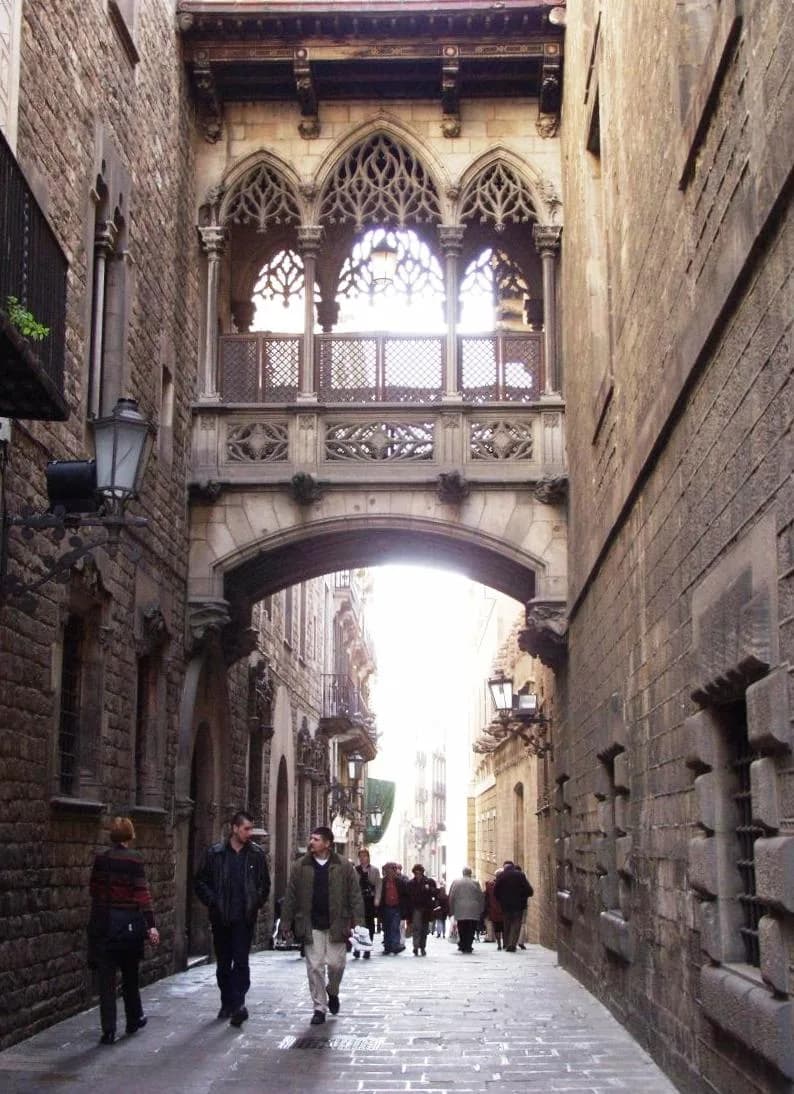
The Barri Gòtic (Gothic Quarter) is the enchanting historic heart of Barcelona's Ciutat Vella (Old City), stretching from La Rambla to Via Laietana and from the Mediterranean seafront to Plaça de Catalunya. This labyrinthine neighborhood, the birthplace of Barcelona, blends over two thousand years of history within a dense maze of narrow medieval alleyways, secluded cobblestone plazas, vibrant tapas bars, artisan boutiques, and soaring Gothic monuments. Highlights of the district include the Cathedral of the Holy Cross and Saint Eulalia, the iconic neo-Gothic Pont del Bisbe bridge connecting Carrer del Bisbe, the historic Plaça del Rei palace complex, the tranquil Plaça de Sant Felip Neri, and the bustling, palm-fringed Plaça Reial. Walking through the Gothic Quarter offers an immersive journey through Barcelona's Roman foundations, medieval zenith as a Mediterranean maritime power, and vibrant contemporary Catalan urban culture.
History
The Gothic Quarter is the birthplace and historical epicenter of Barcelona. Following Roman colonization in the 1st century BC, Barcino was enclosed within heavy defensive stone walls. During the Middle Ages, particularly the 13th to 15th centuries when Barcelona was the capital of the Crown of Aragon, the city expanded rapidly as a dominant Mediterranean maritime powerhouse. Grand civic, religious, and royal complexes were erected, including the Gothic Cathedral, the Palau Reial Major, and the seat of the Generalitat. In the late 19th and early 20th centuries, in preparation for the 1929 International Exposition, several historical facades were meticulously restored or relocated, giving the Gothic Quarter its romantic, unified medieval appearance that captivates millions of travelers today.
Fun Facts
- Ancient Barcino Heart: The Gothic Quarter was originally founded as the Roman colony of 'Colonia Faventia Julia Augusta Pia Barcino' around 15–10 BC during the reign of Emperor Augustus.
- The Legendary Bishop's Bridge: The famous covered bridge over Carrer del Bisbe ('Pont del Bisbe') looks medieval but was actually designed in 1928 by Catalan architect Joan Rubió i Bellver for the 1929 Barcelona International Exposition. Legend has it that if you spot the hidden skull with a dagger beneath the arch, you must make a wish.
- Pablo Picasso's Creative Haunt: A young Pablo Picasso lived, studied, and held his very first art exhibition in the Gothic Quarter at the bohemian tavern-café 'Els Quatre Gats' on Carrer de Montsió in 1899.
- Plaça de Sant Felip Neri Scars: The shrapnel-pocked facade of the Church of Sant Felip Neri preserves the visible historical scars from an aerial bombardment during the Spanish Civil War in January 1938.
Guide Tips
- Best Way to Explore: Put away the map and wander the atmospheric side alleys off Carrer del Bisbe, Carrer de la Boqueria, and Carrer dels Banys Nous.
- Early Morning Stroll: Visit between 07:30 and 09:30 to experience the quiet magic of the narrow medieval stone streets before the crowds arrive.
- Hidden Plaza Cafes: Pause for a vermouth or coffee on Plaça del Rei or the tranquil square of Plaça de Sant Felip Neri.
Opening Hours
24/7 - Historic Neighborhood & Public Squares