
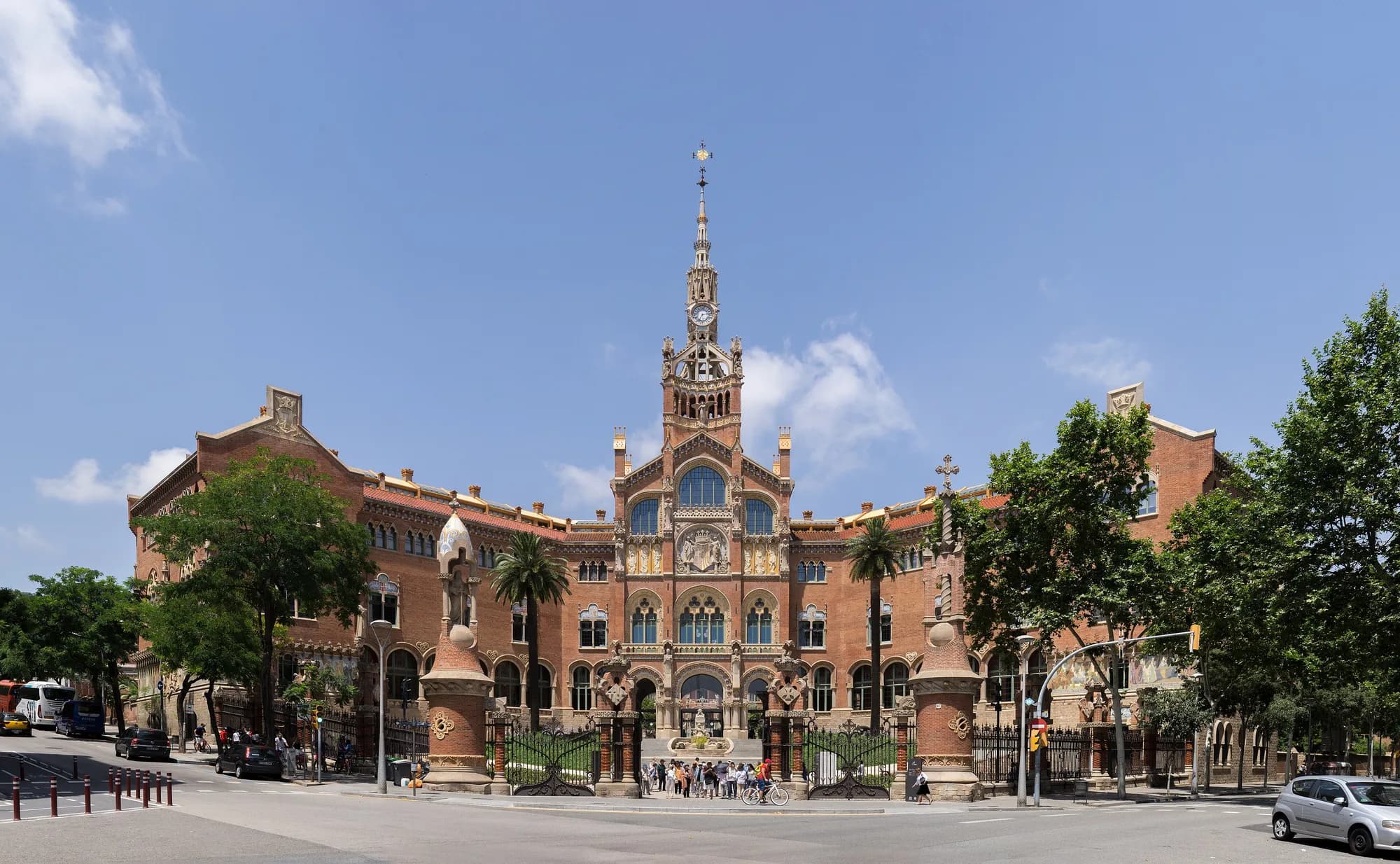
Hospital de Sant Pau
Imagine stepping into a world where art and architecture intertwine to create a sanctuary for healing. Welcome to the Hospital de Sant Pau, Barcelona's crown jewel of Modernisme and Art Nouveau. This UNESCO World Heritage Site, designed by the visionary Lluís Domènech i Montaner, is not just a hospital but a testament to the power of beauty and nature in the healing process. As you wander through its labyrinth of brick pavilions, each adorned with intricate stained glass and floral tilework, you'll discover a hidden world of subterranean tunnels and tranquil gardens that once served as a therapeutic haven for patients. Prepare to be captivated by the sheer scale and detail of this architectural marvel, where every corner tells a story of innovation and care.
The Recinte Modernista de Sant Pau (Hospital de la Santa Creu i Sant Pau) is the world's largest Catalan Modernisme and Art Nouveau architectural complex, located at the end of Avinguda de Gaudí in Barcelona's Guinardó/Eixample district. Designed by visionary modernist architect Lluís Domènech i Montaner and built between 1901 and 1930, this UNESCO World Heritage Site was conceived as an enlightened, therapeutic 'garden city hospital' where natural light, fresh air, vibrant gardens, and uplifting art contributed directly to healing patients. The complex comprises sixteen standalone brick pavilions lavishly adorned with colorful glazed ceramic roofs, intricate stained glass, floral tilework, towering brick clock spires, and inspiring sculptures by Pau Gargallo and Eusebi Arnau. All pavilions are ingeniously interconnected by more than a kilometer of subterranean brick tunnels designed to transport patients and medical supplies invisibly beneath manicured orange-tree gardens. Fully restored after closing as a functioning hospital in 2009, Sant Pau stands today as a breathtaking open-air cultural and heritage institution.
History
The roots of the institution date back to 1401 when six medieval hospitals in Barcelona merged into the Hospital de la Santa Creu in El Raval. By the late 19th century, the historic Gothic hospital had grown overcrowded and inadequate for modern sanitation. In 1896, Catalan banker and philanthropist Pau Gil i Serra passed away in Paris, leaving a substantial bequest in his will to build a state-of-the-art public hospital in Barcelona dedicated to Saint Paul. Architect Lluís Domènech i Montaner was commissioned to create a revolutionary hospital complex. Between 1901 and 1913, Domènech i Montaner designed and built the first twelve pavilions. Following Pau Gil's funds running out and Domènech i Montaner's passing in 1923, his son Pere Domènech i Roura completed six additional pavilions in a compatible style. In 1930, King Alfonso XIII officially inaugurated the hospital. In 1997, UNESCO designated Sant Pau a World Heritage Site along with the Palau de la Música Catalana. In 2009, hospital healthcare operations moved to a newly constructed adjacent medical facility, enabling a comprehensive five-year restoration of the historic pavilions.
Fun Facts
- 🏰 World's Largest Art Nouveau Ensemble: Spanning nine full city blocks, Sant Pau is recognized as the largest architectural complex of the Art Nouveau and Modernisme movements in the world.
- 🚇 The Secret Subterranean Tunnels: A subterranean network of brick-vaulted tunnels over a kilometer long connects all 16 pavilions underground, allowing hospital staff, stretchers, and supplies to move between buildings without exposing patients to weather or contaminating outdoor gardens.
- 🩺 Beauty as Medicine: Architect Domènech i Montaner firmly believed that aesthetic beauty, botanical gardens, and sunlight were essential therapeutic tools that accelerated patient recovery, integrating cheerful floral mosaics and domes throughout every ward.
- 📐 The Diagonal Axis to Sagrada Família: Domènech i Montaner deliberately oriented the hospital's entrance at a 45-degree angle to the Eixample street grid, aligning it perfectly along Avinguda de Gaudí to face Antoni Gaudí's Sagrada Família.
Guide Tips
- 🚶 The Gaudí Avenue Stroll: After visiting the Sagrada Família, take a pleasant 10-minute pedestrian stroll up Avinguda de Gaudí lined with café terraces directly into Sant Pau's grand gate.
- 📸 The Administration Pavilion Staircase: Don't miss the grand entrance vestibule and stained-glass ceremonial hall (Sala Domènech i Montaner) in the Administration Pavilion for one of Barcelona's most spectacular interior ceilings.
- 🌿 Relax in the Orange Tree Gardens: Take time to walk the tranquil outdoor pathways between the pavilions, where aromatic orange trees and medicinal plants recreate the original 1910s therapeutic environment.
Opening Hours
Mon-Sun: 09:30 - 18:30 (Nov-Mar: Mon-Sun 09:30 - 17:00)