
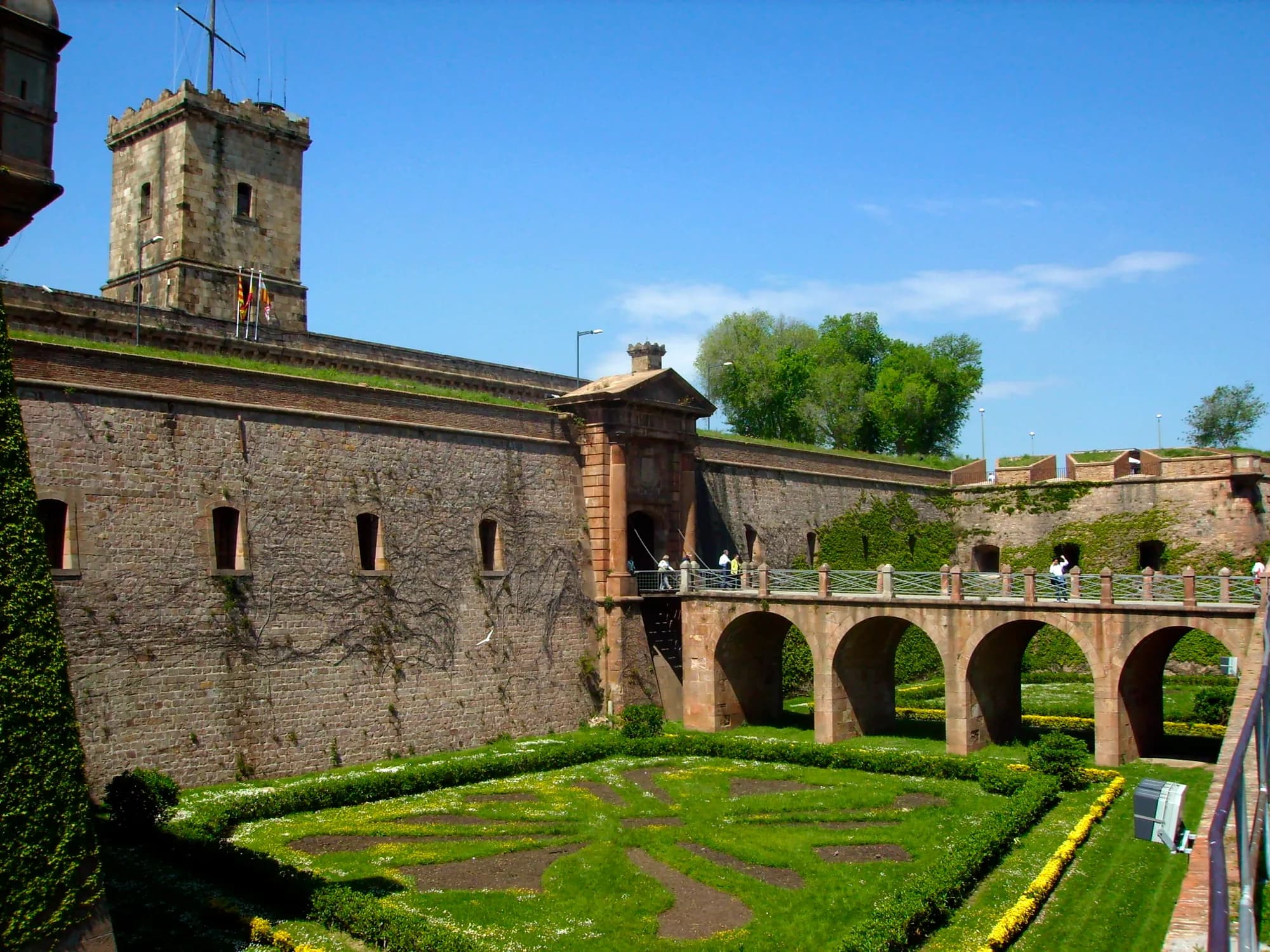
Montjuïc
Imagine standing atop Montjuïc, a majestic hill that has stood as a sentinel over Barcelona for centuries. This historic landmark, rising 177 meters above the city, offers a panoramic view that is as breathtaking as it is storied. From the medieval Castell de Montjuïc that crowns the summit to the lush hillside gardens and world-renowned art institutions, Montjuïc is a treasure trove of culture, history, and natural beauty. Whether you're exploring the ancient military bastions, riding the aerial cable cars across the Mediterranean harbor, or strolling through fragrant Mediterranean gardens, Montjuïc promises an unforgettable journey through time and space.
Montjuïc is a prominent, broad hill rising 177 meters above Barcelona's historic port and coastline in the Sants-Montjuïc district. Serving as a strategic defensive stronghold and cultural landmark for centuries, Montjuïc boasts an extraordinary concentration of green parks, historic fortresses, art institutions, and iconic sporting venues. Key attractions across the hill include the 17th-century Castell de Montjuïc crowning the summit with 360-degree vistas, the Palau Nacional housing the Museu Nacional d'Art de Catalunya (MNAC), the Joan Miró Foundation (Fundació Joan Miró), the Olympic Ring (Anella Olímpica) created for the 1992 Summer Olympic Games, the historic Montjuïc Cable Car (Telefèric de Montjuïc), and lush hillside gardens such as the Jardins de Joan Brossa and Jardins de Mossèn Costa i Llobera. Whether exploring medieval military bastions, riding the aerial cable cars across the Mediterranean harbor, or strolling through fragrant Mediterranean gardens, Montjuïc provides one of Barcelona's most diverse cultural and scenic escapes.
History
Montjuïc, meaning 'Jewish Mountain' in medieval Catalan (referencing a medieval Jewish cemetery found on its slopes), has been inhabited since antiquity by Iberian tribes and Romans. During the Reapers' War in 1640, a military fortress was quickly constructed at the summit to defend against Spanish royal forces, later rebuilt into the sprawling stone star-fortress seen today under military engineer Juan Martín Cermeño in the 18th century. Montjuïc played a pivotal role during the Spanish Civil War and the Francoist dictatorship, serving as a military prison and execution site—most notably for Catalan President Lluís Companys in 1940. The hill underwent two major urban transformations: first for the 1929 Barcelona International Exposition, which added the Palau Nacional, Magic Fountain, and Greek Theatre; and second for the 1992 Summer Olympic Games, which modernized the Estadi Olímpic Lluís Companys, Palau Sant Jordi, and Montjuïc Communications Tower (Torre Calatrava).
Fun Facts
- The Jewish Mountain: The name 'Montjuïc' translates from medieval Catalan as 'Mountain of the Jews', referring to the ancient Jewish community cemetery situated on the northeast hillside.
- 1992 Olympic Centerpiece: Montjuïc was the primary venue zone for the 1992 Barcelona Summer Olympic Games, hosting the opening and closing ceremonies at the Estadi Olímpic and the diving events overlooking the city skyline at the Piscina Municipal.
- Legendary Formula 1 Circuit: Between 1969 and 1975, the winding public roads of Montjuïc served as the Montjuïc Circuit, one of the most challenging and scenic street courses in Formula One history.
- Dual Cable Car Systems: Montjuïc features two distinct cable car lines: the Telefèric de Montjuïc (modern monocable gondola to the castle) and the historic 1929 Transbordador Aeri del Port (red aerial tram linking Montjuïc to Barceloneta Beach over the harbor).
- Rare Desert Microclimate Garden: The Jardins de Mossèn Costa i Llobera on the south slope of Montjuïc host one of Europe's largest collections of outdoor cacti and succulent plants, benefiting from a unique microclimate that is several degrees warmer than the rest of the city.
Guide Tips
- Scenic Ascent Options: Take the Montjuïc Funicular from Paral·lel Metro station (included in standard T-Casual/Metro tickets) to the middle station, then connect to the Telefèric de Montjuïc or walk up through the gardens to the castle.
- Sunset from Mirador del Alcalde: Stop by Mirador del Alcalde for sweeping harbor views, stone-mosaic pathways designed by Joan Josep Tharrats, and golden-hour views over the cruise port and Mediterranean.
- Combine MNAC & Miró: Plan a full half-day to visit the Museu Nacional d'Art de Catalunya (MNAC) for Romanesque frescoes and the Fundació Joan Miró for modern art.
- Wear Walking Shoes: Montjuïc is vast with significant changes in elevation; bring comfortable footwear and water when exploring the park trails.
Opening Hours
24/7 - Public Hill, Parks & Scenic Viewpoints