
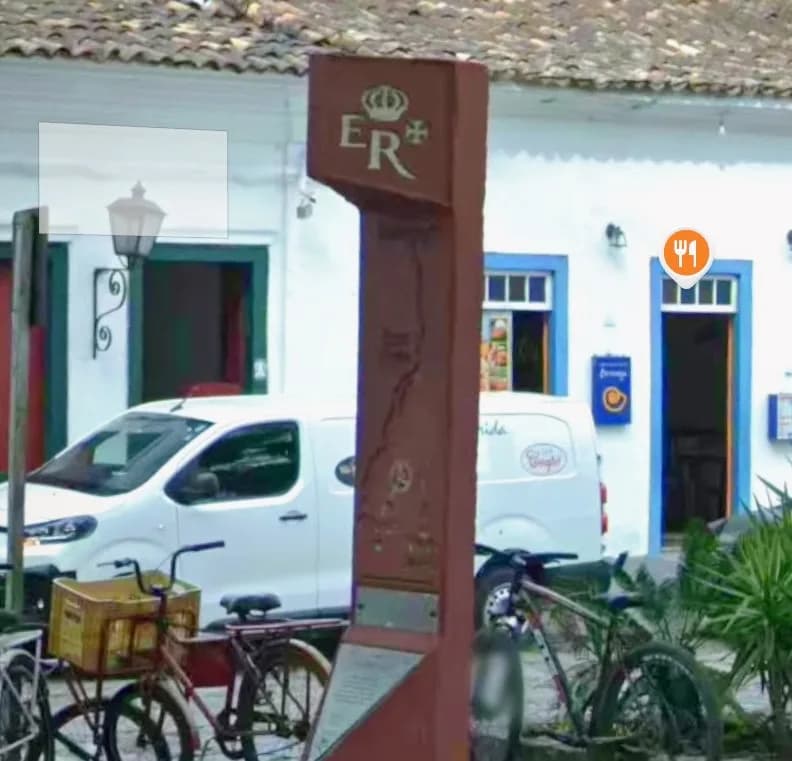
Marco 217 da Estrada Real
Imagine standing at the very beginning of Brazil's colonial 'Royal Road', the Estrada Real, where the historic Caminho Velho meets the Chafariz do Pedreira. Marco 217 da Estrada Real in Paraty is not just a stone marker; it's a portal to the past, where muleteers once loaded gold and other goods onto mule trains, setting off on a journey to Rio de Janeiro and beyond. As you stand here, you're not only witnessing the end of an era but also collecting a tangible piece of history with Paraty's stamp in your Estrada Real Passport.
This modest stone marker beside the Chafariz do Pedreira marks the end of the line, or the very beginning, of the Estrada Real, Brazil's colonial 'Royal Road'. Marco 217 is the last marker of the Caminho Velho (Old Road), the original route that linked Paraty's port to Ouro Preto and the gold mines of Minas Gerais. For more than a century, gold, and later other goods, came down the mountains on mule trains and was shipped from Paraty towards Rio de Janeiro and Lisbon. Muleteers and travellers set off for Minas Gerais along today's Rua Presidente Pedreira, just beside the marker. It's a quick photo stop. If you're travelling the Estrada Real, this is also where you collect Paraty's stamp in the Estrada Real Passport.
History
The Estrada Real was the network of official roads the Portuguese Crown used to move gold and diamonds from Minas Gerais to the coast and to control travellers and collect taxes. Using any other route was forbidden. The first of its routes, the Caminho Velho, ran from Ouro Preto down to the port of Paraty, partly following old Indigenous trails, and its paved sections were built by enslaved Africans. Paraty's role as a gold port made it one of colonial Brazil's most important port towns in the 18th century. Its importance faded after the Caminho Novo opened a direct route from the mines to Rio de Janeiro. Today the historic routes are signposted with numbered markers, and Marco 217 in Paraty closes the Caminho Velho.
Fun Facts
- For travellers heading inland, Marco 217 works as marker zero: the start of the Caminho Velho to Ouro Preto in Minas Gerais.
- Using any road other than the Estrada Real was forbidden in colonial times, so the Crown could tax the gold travelling along it.
- The Caminho Novo was created later to bypass Paraty, partly because ships sailing from Paraty to Rio were attacked by pirates.
Guide Tips
- Collecting Estrada Real stamps? Paraty's stamp for the Estrada Real Passport is given at the tourist information point on Praça do Chafariz, right next to the marker.
Opening Hours
Open-air, always accessible