
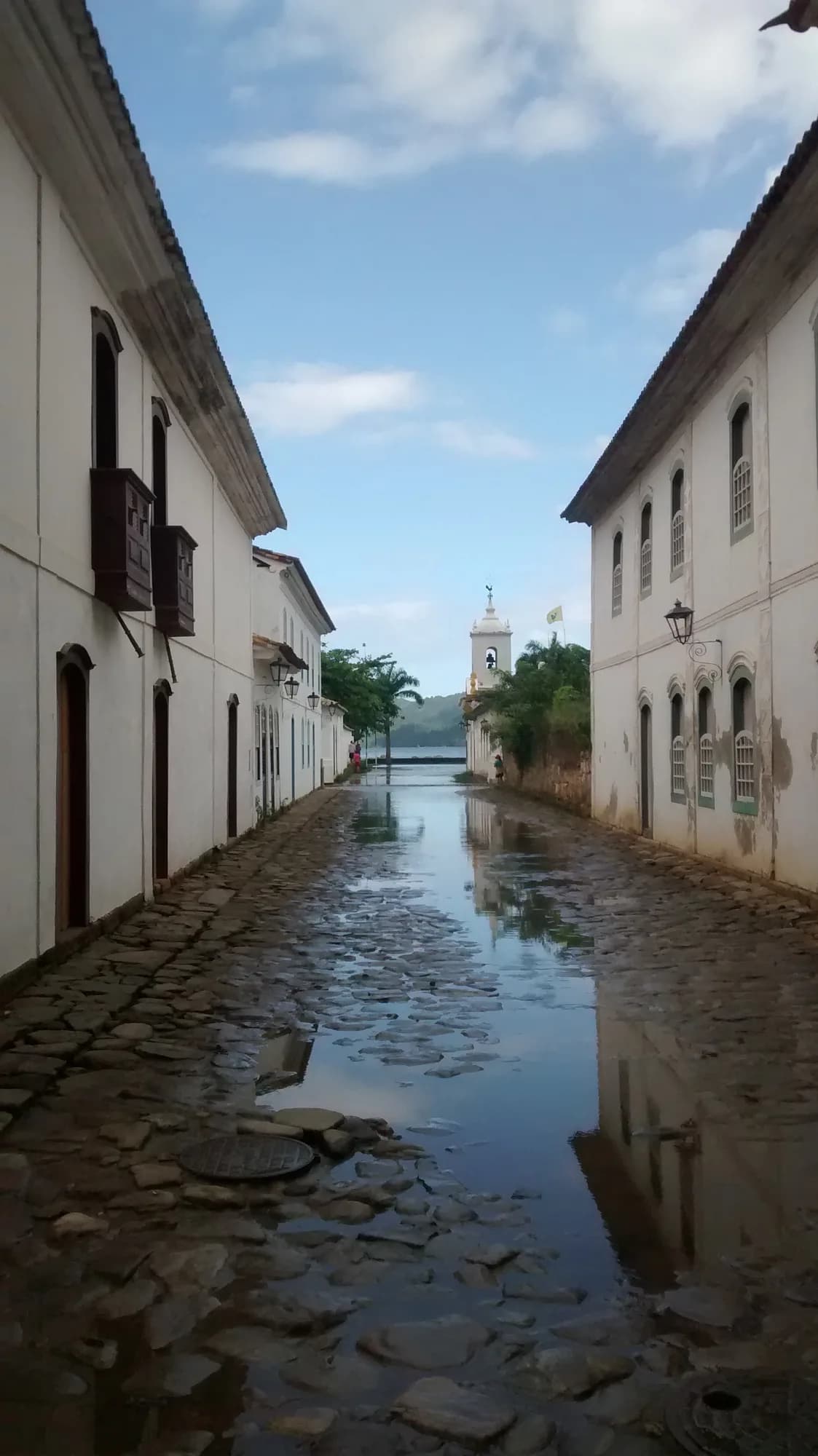
Rua Fresca
Imagine strolling along Rua Fresca in Paraty, where every step reveals a piece of Brazil's rich history. This charming street, running along the edge of Paraty Bay, is a treasure trove of colonial elegance and imperial heritage. The star attraction, the Casa do Príncipe, with its striking yellow and green façade, stands as a testament to the country's imperial past. Just a short walk away, the Igreja de Nossa Senhora das Dores, completed around 1800, adds to the area's historical allure. Whether you're a history buff or simply seeking a picturesque walk, Rua Fresca offers a captivating glimpse into Paraty's storied past. Come, discover the stories etched in stone and the vibrant history that breathes life into this historic street.
Rua Fresca runs along the edge of Paraty Bay, on the seaward side of the historic centre, and its star is the Casa do Príncipe, the 'Prince's House'. This handsome colonial townhouse from around 1850 faces the sea, with yellow doors framed in green. Those are the colours of Brazil's imperial family. Look up to spot the imperial coat of arms on the façade. The house belongs to the Orléans e Bragança family, descendants of Brazil's last emperor, Dom Pedro II, and of Princess Isabel. It was bought in 1960 by Dom João Maria de Orléans e Bragança, a grandson of Princess Isabel, and today it's the home of his son, Prince João Henrique. It's a private residence, so admire it from the street. It's a regular stop on the old town's guided walks. A few steps along the same street is the small Igreja de Nossa Senhora das Dores, the 'Capelinha', also facing the bay. Pair the two with the waterfront for a short, scenic loop. Historical Context: Paraty's historic centre keeps its 18th-century street plan, laid out on low ground right beside the sea, and Rua Fresca follows the shoreline on the town's seaward edge. The Casa do Príncipe (also listed as the Sobrado do Príncipe) dates from around 1850. In 1960 it was bought by Dom João Maria de Orléans e Bragança, grandson of Princess Isabel, the princess who signed Brazil's abolition of slavery in 1888. It passed to his son, Dom João Henrique de Orléans e Bragança, great-grandson of Princess Isabel, who lives there today. The house has also hosted cultural events, including gatherings during the Flip literary festival. Nearby, the Igreja de Nossa Senhora das Dores was completed around 1800 and is described as the church of Paraty's colonial elite.
History
Paraty's historic centre keeps its 18th-century street plan, laid out on low ground right beside the sea, and Rua Fresca follows the shoreline on the town's seaward edge.
The Casa do Príncipe (also listed as the Sobrado do Príncipe) dates from around 1850. In 1960 it was bought by Dom João Maria de Orléans e Bragança, grandson of Princess Isabel, the princess who signed Brazil's abolition of slavery in 1888. It passed to his son, Dom João Henrique de Orléans e Bragança, great-grandson of Princess Isabel, who lives there today. The house has also hosted cultural events, including gatherings during the Flip literary festival.
Nearby, the Igreja de Nossa Senhora das Dores was completed around 1800 and is described as the church of Paraty's colonial elite.
Fun Facts
- The Casa do Príncipe's yellow and green façade shows the colours of Brazil's imperial family: green for the House of Bragança and yellow for the Habsburgs.
- The house belongs to descendants of Princess Isabel and Emperor Dom Pedro II, Brazil's former imperial family.
- Dom João Maria de Orléans e Bragança bought the house in 1960, and his son, Prince João Henrique, lives there today.
- The nearby Igreja de Nossa Senhora das Dores, built around 1800, is nicknamed the 'Capelinha' and was the church of colonial Paraty's elite.
Guide Tips
- Look for the house with yellow doors framed in green, facing the sea, and find the imperial coat of arms on the façade. It's a private home, so enjoy it from the street.
- Pair the Casa do Príncipe with the Igreja de Nossa Senhora das Dores for a short, scenic loop.
Opening Hours
Open-air street, always accessible