
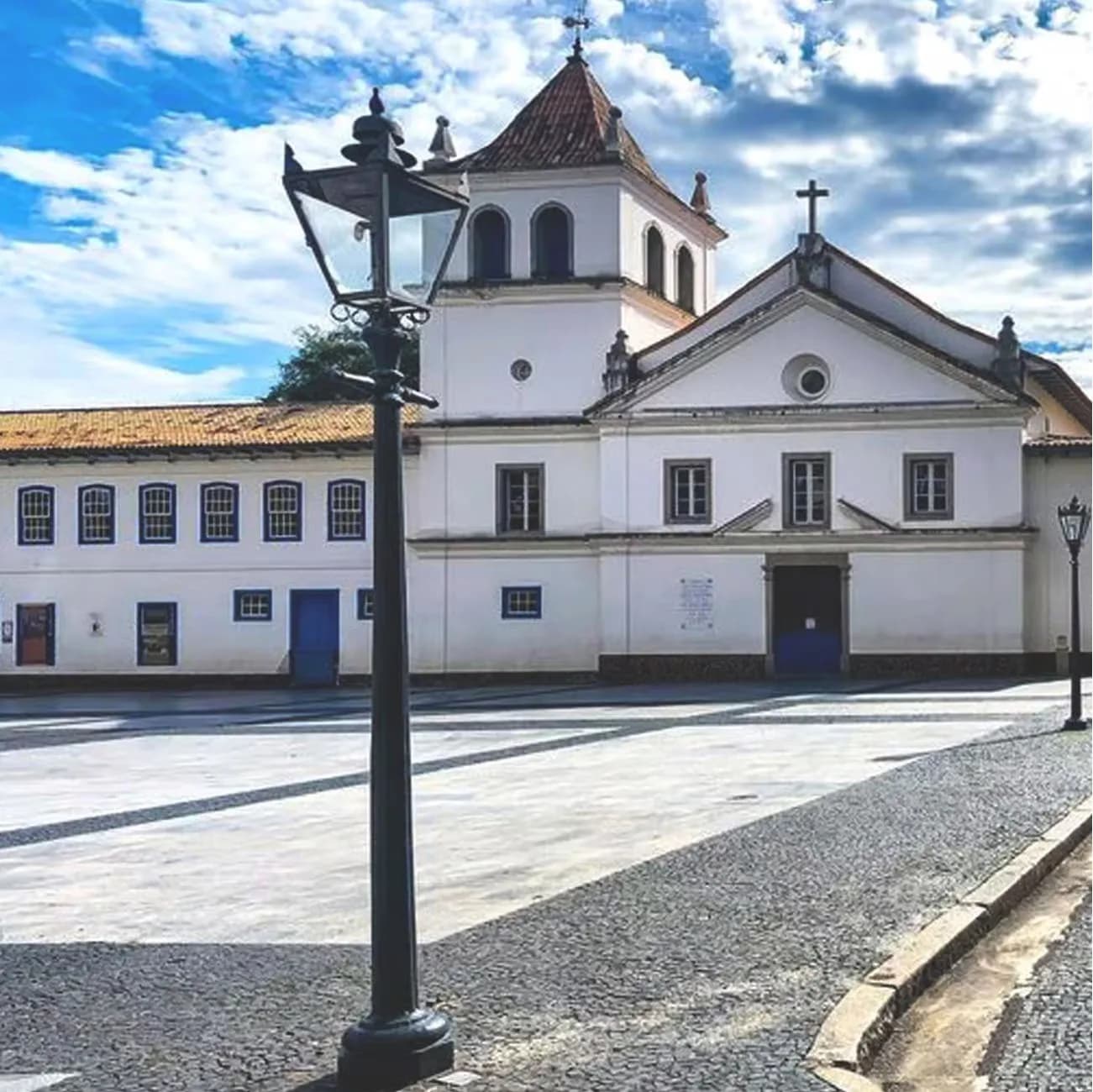
Patio do Colégio
Step back in time at Pátio do Colégio, the cradle of São Paulo, where history and architecture intertwine. This historic site, founded in 1554 by Jesuit priests, is a testament to the city's rich past. As you wander through the grounds, you'll find yourself surrounded by remnants of the past, from the original rammed earth wall to the replica of the original church. Each corner of Pátio do Colégio tells a story, inviting you to explore the legacy of São Paulo's founding.
The Pátio do Colégio, considered the birthplace of São Paulo, marks the exact spot where the city was founded on January 25, 1554. It holds historical significance as the site of the first mass and served as the government seat for over a century.
History
The Pátio do Colégio (or Pateo do Collegio) is widely considered the birthplace of São Paulo. It marks the exact spot where the city was founded on January 25, 1554.
Historical Significance
Foundation: A group of Jesuit priests, including Manuel da Nóbrega and José de Anchieta, established a small mission on a hill between the Tamanduateí and Anhangabaú rivers to evangelize the indigenous population.
The First Mass: The city’s official start dates back to the inaugural mass celebrated at the site's Jesuit school.
Government Seat: For over a century (1765–1912), the building served as the Palace of the Governors, the official residence and seat of the São Paulo government.
The monument in front of the Pátio do Colégio is the Glória Imortal aos Fundadores de São Paulo (Immortal Glory to the Founders of São Paulo).
The Monument: Glória Imortal
Inaugurated in 1925 to celebrate the city's 4th centenary, this 25.75-meter granite and bronze column was created by Italian sculptor Amadeo Zani.
The Figure at the Top: A bronze female figure representing the City of São Paulo crowns the city's founders. She holds a torch (symbolizing eternal love) in her right hand and laurel branches and a sickle (glory and labor) in her left.
The Base: Four bronze reliefs depict key historical moments:
The first mass celebrated in 1554.
The catechism of indigenous people.
The defense of the village by Chief Tibiriçá.
The peace mission of Anchieta and Nóbrega to the Tamoio people.
Fun Facts
- The white building you see today is actually a replica finished in 1979.
- The garden contains a preserved segment of a rammed earth wall from 1585, the oldest architectural element in São Paulo.
Guide Tips
- Visit the Anchieta Museum with colonial sacred art and documents.
- See the Church of Blessed José de Anchieta with relics of the saint.
- Explore the original 16th-century wall made of rammed earth.
- Admire the Monumento à Glória Imortal, a granite column honoring the city's founders.
Opening Hours
Mon: Closed, Tue-Sat: 9:00 AM - 4:00 PM, Sun: Closed