
Santa Ifigênia Viaduct
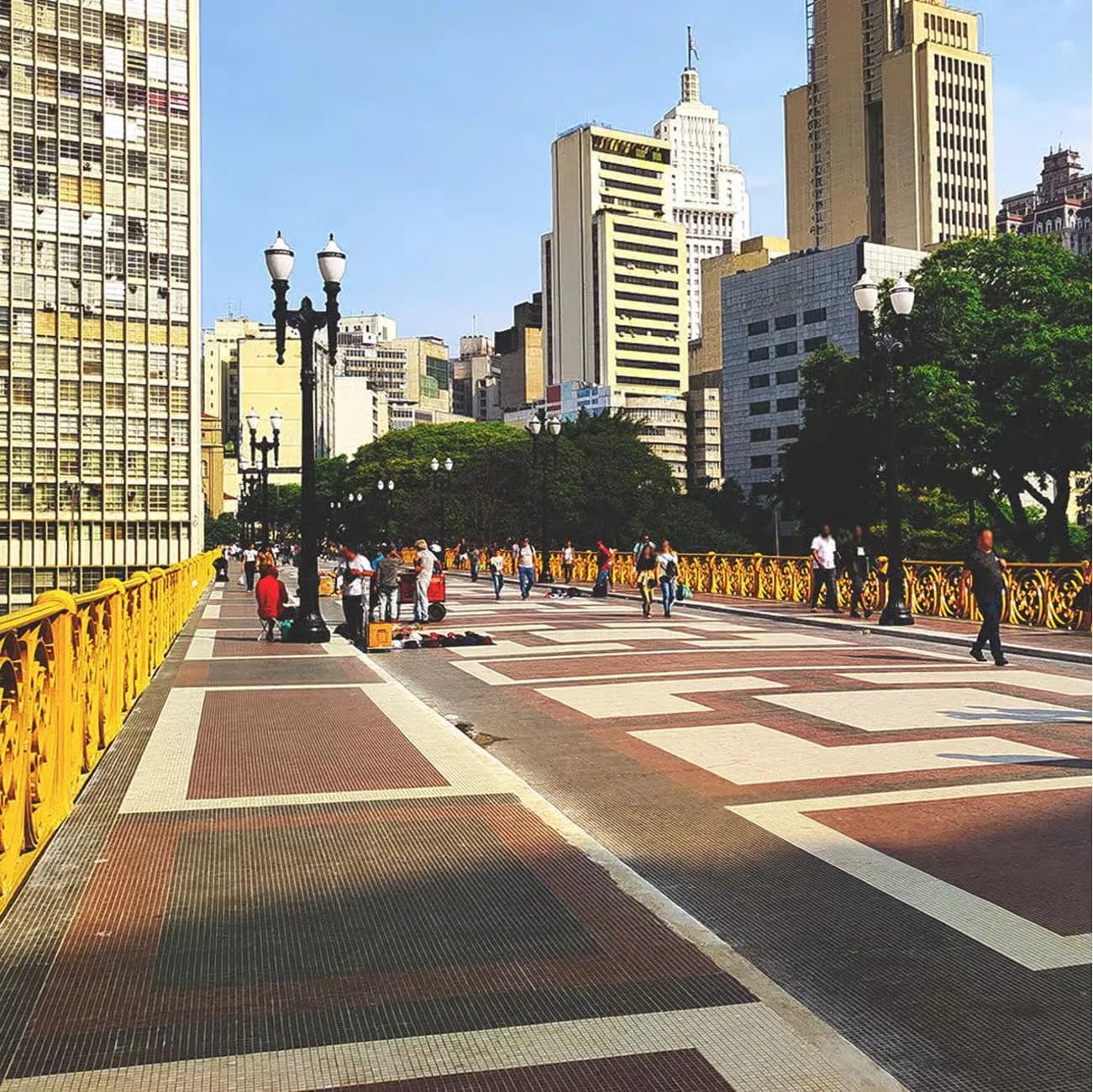
Imagine standing on a bridge that not only connects two parts of São Paulo but also tells the story of the city's transformation. The Santa Ifigênia Viaduct, with its striking green metal structure, is more than just a pedestrian bridge; it's a gateway to the past and present of this vibrant metropolis. As you walk along its length, you'll be treated to stunning views of the city's skyline, where historic buildings stand side by side with modern skyscrapers. Whether you're a history buff, an architecture enthusiast, or simply a visitor looking for a unique perspective, the Santa Ifigênia Viaduct promises an unforgettable experience.
The Santa Ifigênia Viaduct is one of São Paulo's most recognizable landmarks and one of the city's first large steel bridges. It was built to connect the historic center with the rapidly growing northern neighborhoods as São Paulo expanded during the coffee boom. Its distinctive green metal structure was manufactured in Belgium, shipped across the Atlantic, and assembled in São Paulo. Inspired by European engineering, the bridge reflected the city's ambition to become a modern metropolis comparable to Paris or London. Today, the viaduct is reserved for pedestrians, making it one of the best places to admire São Paulo's historic skyline. From here, visitors enjoy panoramic views of landmarks such as the Martinelli Building, the Banespa Building (Farol Santander), the Vale do Anhangabaú, and the city's mix of historic and modern architecture.
History
At the beginning of the 20th century, the valley below was a major obstacle to the city's growth. Thanks to the enormous wealth generated by coffee, São Paulo invested heavily in modern infrastructure, including bridges, railways, public buildings, and elegant avenues. The viaduct became a symbol of this new, modern city.
Its distinctive green metal structure was manufactured in Belgium, shipped across the Atlantic, and assembled in São Paulo. Inspired by European engineering, the bridge reflected the city's ambition to become a modern metropolis comparable to Paris or London.
Today, the viaduct is reserved for pedestrians, making it one of the best places to admire São Paulo's historic skyline. From here, visitors enjoy panoramic views of landmarks such as the Martinelli Building, the Banespa Building (Farol Santander), the Vale do Anhangabaú, and the city's mix of historic and modern architecture.
Fun Facts
- Opened in 1913, it was one of Brazil's first large steel pedestrian viaducts.
- The steel structure was manufactured in Belgium and assembled in São Paulo.
- The project was financed during the period when coffee made São Paulo one of the richest cities in South America.
- Today it is pedestrian-only, making it one of downtown's best viewpoints.
- The viaduct has appeared in numerous Brazilian films, television productions, and photographs, becoming an icon of the city.
Guide Tips
- Pause in the middle of the bridge for one of the best panoramic photos of downtown São Paulo.
Opening Hours
24/7 - External Visit